Children

Spare the Rod: Study Ties Corporal Punishment to Mental Illness

I found this article on corporal punishment (spanking, hitting, etc.) to be very thought provoking. It is very interesting research and is published in an esteemed journal. I would like to read the original research to see how they are defining corporal punishment exactly and for what crimes it is being administered and with what frequency the children are being punished. They state that the occasional spanking was not included but that if a person answered “sometimes” they were included. How often is “sometimes?” Once a week? Once a month? Frequency must be a contributing factor as this article suggests based on the study’s methods.

Interestingly, I just read this article last week and am now reading how Texas would like to legalize corporate punishment in the school system. Perhaps they didn’t get to read this piece yet.

Spare the rod: Study ties corporal punishment to mental illness

http://daily.decisionhealth.com/Articles/Detail.aspx?id=513019 (Accessed July 8, 2012)

July 3, 2012 by: Roy Edroso

Researchers say this is the first study to show the psychological result of physical punishment in the absence of abuse or heightened family dysfunction.

The study appearing in Pediatrics finds that “harsh physical punishment was associated with increased odds of mood disorders, anxiety disorders, alcohol and drug abuse/dependence, and several personality disorders after adjusting for sociodemographic variables and family history of dysfunction…”

In other words, no matter what other strikes are already against kids in life, beating them only makes things worse.

Respondents were asked, “As a child how often were you ever pushed, grabbed, shoved, slapped or hit by your parents or any adult living in your house?” Those who answered “sometimes” or more often were considered. (The mere occasional spanking didn’t qualify subjects.)

Those who endured more severe treatment, e.g. sexual abuse, were excluded; adjustments were made for those whose home life had a heightened dysfunction (e.g., parent on drugs or in prison).

“To our knowledge,” say the authors, “there have been no examinations of the link between physical punishment and a broad range of mental health disorders in a nationally representative sample controlling for several types of child maltreatment” prior to theirs.

By this standard, about 6% of subjects qualified as physically punished without complicating factors — much lower than the presumed range in the general population, probably because of the strict exclusions.

Corporal punishment didn’t seem to factor into Axis II psychological disorders in adulthood. For example, while subjects from a dysfunctional family who experienced harsh physical punishment showed a tendency toward schizoid and obsessive-compulsive personality as adults, those who were not from such families showed no such tendency.

But for Axis I disorders, such as “major depression, dysthymia, mania, any mood disorder, specific phobia, any anxiety disorder, and any alcohol and drug abuse or dependence disorders,” the physically punished showed higher rates than those who received lighter punishments.

“From a public health perspective,” the authors conclude, “reducing physical punishment may help to decrease the prevalence of mental disorders in the general population.”

Nature Play as an Everyday Joy of Childhood? For Kids, Frequency Requires Proximity

NATURE PLAY AS AN EVERYDAY JOY OF CHILDHOOD?
 http://childrenandnature.ning.com/group/natureclubsforfamilies/forum/topics/nature-play-as-an-everyday-joy-of-childhood-for-kids-frequency
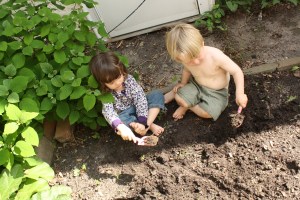
Most of us who enjoyed nature play in our childhoods realize that it didn’t matter if we had a pristine patch of forest to play in or just a couple of vacant city lots.  Either way, there were endless things to find, explore, capture, imagine, and play with.  But what was important is that these places were right there, within our walking/running/biking distance.  No car, no parent, and no schedule were needed to get outside and play in nature.

The children and nature movement is fostering wonderful new ways for kids to play outdoors, such as designed natural playspaces, family nature clubs, and naturalized schoolyards.  These and other similar efforts are valuable steps – not only for the kids, but for parents who are reconsidering their children’s indoor, nature-deprived lives.  Yet most of these new approaches are challenged in one vital dimension:  frequency

When Dr. Louise Chawla (University of Colorado) researched influential childhood experiences in nature, she found that, “The special places that stood out in memory, where people formed a first bond with the natural world, were always a part of the regular rhythm of life.”  Those powerful experiences didn’t typically come from annual family camping trips, but rather from day-after-day, week-after-week events in children’s lives.  Actually, no special research is needed to realize that frequent childhood activities have more lasting impact than ephemeral ones.  Practicing the violin once a month is not a very effective strategy!  Is it better than nothing?  Perhaps – but only if you set your sights very low.

The same equation applies to nature play.  If we want it to have maximum impact, then it needs to be “part of the regular rhythm of life.”  It seems unlikely that we can achieve this solely through monthly meet-ups or widely scattered playspaces – strategies that require parents, cars and calendars, and thus compete for time within families’ hectic schedules.  Are these approaches valuable?  Absolutely!  Are they sufficient?  Unlikely.

If we really want to power-up nature-based play, it needs to be available where children can enjoy it almost any day, without adult involvement or confining schedules.  For most kids this means either home yards or neighborhood parks – and (sadly) only the former is likely to alleviate the fears of 21st-century American parents.  Can a typical quarter-acre suburban yard actually support nature play?  Or a city lot half that size?  Or an apartment courtyard?  The answer is yes, especially for kids of about two to eight years old.  Younger children’s worlds are much smaller than those of adults.  They don’t need sprawling spaces or eye-popping vistas.  Their attention naturally focuses on tiny and manipulable pleasures:  on dandelions rather than rose gardens; on earthworms rather than herds of bison; on a patch of dirt to dig in rather than a yawning cave to explore.

Unfortunately, the typical American yard is no haven for nature play.  Good nature play requires “rich” settings – that is, a diversity of plants, animals, and landforms that create endless opportunities for discovery and engagement.  Turf grass lawns, solitary shade trees, and a few neatly trimmed shrubs do not meet these criteria.  However, even the sparest yard can be augmented for good nature play with a little thought, a dose of elbow grease, and much less money than what those elaborate backyard play sets cost.

The key is to create yards with a “density of diversity:” a collection of micro-habitats that will harbor lots of natural discoveries and delights throughout the seasons.  These micro-habitats might include a shrub thicket, a wildflower garden, a jumbled pile of boulders, a tiny garden pond, a butterfly garden, a berry patch, a mass of tall native grasses, or even a space allowed to just grow into whatever comes up!  Once you’ve established a few of these tiny worlds in your yard, you can enhance them with a digging pit or a giant dirt pile, a couple of large logs, bird and toad houses, a bench or hammock in a quiet nook, and plenty of “loose parts” to nurture creative and constructive play.  These loose parts can be branches, driftwood, cattails, bamboo poles, boards, tree cookies (log slices), tarps, seed pods, pine cones, large boxes, hay bales, and whatever else you can readily scrounge up.

By focusing your primary efforts on creating multiple micro-habitats, you will ensure authentic nature play:  interactions with real nature, in all of its beauty, wonder, unpredictability, and adventure.  Manufactured outdoor play components – like the plastic play equipment designed to look natural – do not create the same connections to the natural world.  Kids can’t peel the bark off a plastic log to find rollie-pollies, and they won’t find monarch caterpillars feeding on fiberglass leaves.  In fact, one big, over-grown wildflower bed — or a patch of flowering shrubs laced with tiny paths — will bring more lasting and real nature play to your kids than will any human-made product! 

Note, though, that nature playscapes are more “messy” than most home landscaping, so you may want to keep much of your nature play zone in the backyard where it won’t generate hostility from neighbors who think front yards should look like golf greens.  However, certain nature play features are usually “dressy” enough to bring into front yards, like butterfly gardens, boulders, and herb gardens.  And by highlighting street-side nature play, you may encourage other local parents to think more about “kid-scaping” their own yards.  Nature play zones get better and better when more of your neighbors imitate and add to your own efforts!

None of these steps towards home-based nature play require great knowledge, training, or expense.  They can be implemented bit by bit, and your plans can be in constant flux as you discover what your kids and their friends most enjoy.  The ultimate goal is to create enough nature play “critical mass” so that your kids are excited to play in their own yards — day after day, and whenever they wish.  Then nature play will be a regular joy for your children; then it will achieve the frequency needed to influence and benefit them for decades to come! 

A few suggested resources with ideas to support home-based nature play:

– “A Parents’ Guide to Nature Play” from Green Hearts Institute for Nature in Childhood: http://www.greenheartsinc.org/Parents__Guide.html

– National Wildlife Federation’s guidance on creating backyard wildlife habitats:www.nwf.org/Get-Outside/Outdoor-Activities/Garden-for-Wildlife/Crea…

“Nature Play:  Simple and Fun Ideas for All” from Forestry Commission England:

http://www.forestry.gov.uk/forestry/INFD-7LSEHW

A Child’s Garden:  Enchanting Outdoor Spaces for Children and Parents, by Molly Dannenmaier

Plants for Play:  A Plant Selection Guide for Children’s Outdoor Environments, by Robin Moore

Natural Playscapes:  Creating Outdoor Play Environments for the Soul, by Rusty Keeler

RELATED POSTS:
NOW THIS IS A PLAYGROUND!
BEYOND THE PLAYGROUND
NATURE-BASED CHILDCARE CENTER

The Power of Breastmilk: Kills HIV Virus!

http://www.news-medical.net/news/20120615/Breast-milk-protects-against-oral-transmission-of-HIV.aspx

Breast Milk Protects Against Oral Transmission of HIV

Published on June 15, 2012 at 1:02 AM

More than 15 percent of new HIV infections occur in children. Without treatment, only 65 percent of HIV-infected children will live until their first birthday, and fewer than half will make it to the age of two. Although breastfeeding is attributed to a significant number of these infections, most breastfed infants are not infected with HIV, despite
prolonged and repeated exposure.

HIV researchers have been left with a conundrum: does breast milke transmit the virus or protect against it?

New research from the University of North Carolina School of Medicine explores this paradox in a humanized mouse model, demonstrating that breast milk has a strong virus killing effect and protects against oral transmission of HIV.

“This study provides significant insight into the amazing ability of breast milk to destroy HIV and prevent its transmission,” said J. Victor Garcia, PhD, senior author on the study and professor of medicine in the UNC Center for Infectious Diseases and the UNC Center for AIDS Research. “It also provides new leads for the isolation of natural products that could be used to combat the virus.”

Garcia and colleagues pioneered the humanized “BLT” mouse model, which is created by introducing human bone marrow, liver and thymus tissues into animals without an immune system of their own. Humanized BLT mice have a fully functioning human immune system and can be infected with HIV in the same manner as humans.

In the study, the researchers first determined that the oral cavity and upper digestive tract of BLT mice have the same cells that affect oral transmission of HIV in humans and then successfully transmitted the virus to the mice through these pathways. When the mice were given virus in whole breast milk from HIV-negative women, however, the virus could not be transmitted

“These results are highly significant because they show that breast milk can completely block oral transmission of both forms of HIV that are found in the breast milk of HIV-infected mothers: virus particles and virus-infected cells.” said Angela Wahl, PhD, a post-doctoral researcher in Garcia’s lab and lead author on the paper. “This refutes the ‘Trojan horse’ hypothesis which says that HIV in cells is more stubborn against the body’s own innate defenses than HIV in virus particles.”

Finally, the researchers studied the effectiveness of pre-exposure prophylaxis (PrEP) with antiretroviral medication for oral transmission of HIV. Garcia and his team have previously shown that PrEP is effective against intravenous, vaginal and rectal transmission of HIV in humanized BLT mice. In this study, they gave the mice antiretroviral drugs for seven days (3 days before and 4 days after exposing them to the virus) and found 100 percent protection against virus transmission. These latest findings provide important leads to alternative treatments that could be used to prevent transmission.

“No child should ever be infected with HIV because it is breastfed. Breastfeeding provides critical nutrition and protection from other infections, especially where clean water for infant formula is scarce,” Garcia said.

“Understanding how HIV is transmitted to infants and children despite the protective effects of milk will help us close this important door to the spread of AIDS.”

The study appears in the June 14, 2012 issue of the online journal PLoS Pathogens.

Source University of North Carolina School of Medicine

Children, Pregnant Women and Heat: It Can Be Dangerous!

http://yosemite.epa.gov/ochp/ochpweb.nsf/content/heat.htm

Extreme Heat: Effects on Children and Pregnant Women

Heat-related illnesses are common, yet preventable on hot days. Children and pregnant women need to take extra precautions to avoid overheating on days of extreme heat. Dehydration, heat stroke, and other heat illnesses may affect a child or pregnant woman more severely than the average adult. Download a copy of this information (PDF) (2 pp, 80K, About PDF).

Why are children more susceptible to extreme heat?

  • Physical characteristics – Children have a smaller body mass to surface area ratio than adults, making them more vulnerable to heat-related morbidity and mortality. Children are more likely to become dehydrated than adults because they can lose more fluid quickly.
  • Behaviors – Children play outside more than adults, and they may be at greater risk of heat stroke and exhaustion because they may lack the judgment to limit exertion during hot weather and to rehydrate themselves after long periods of time in the heat. There are also regular reports of infants dying when left in unattended vehicles, which suggests a low awareness of the dangers of heat events.

How do I know if my child is dehydrated?

  • Decreased physical activity
  • Lack of tears when crying
  • Dry mouth
  • Irritability and fussiness

What should I do if my child has become dehydrated?

  • Have the child or infant drink fluid replacement products
  • Allow for rehydration to take a few hours, over which children should stay in a cool, shaded area and sip fluids periodically
  • Call your doctor if symptoms do not improve or if they worsen

How do I know if my child has suffered a heat stroke?
Heat stroke, a condition in which the body becomes overheated in a relatively short span of time, can be life-threatening and requires immediate medical attention.

  • Skin is flushed, red and dry
  • Little or no sweating
  • Deep breathing
  • Dizziness, headache, and/or fatigue
  • Less urine is produced, of a dark yellowish color
  • Loss of consciousness

What should I do if my child has suffered a heat stroke?

  • Immediately remove child from heat and place in a cool environment
  • Place child in bath of cool water and massage skin to increase circulation (do not use water colder than 60F – may restrict blood vessels)
  • Take child to hospital or doctor as soon as possible

How can children be protected from the effects of extreme heat?

  • Hydration – Make sure children are drinking plenty of fluids while playing outside, especially if they are participating in sports or rigorous physical activity. Fluids should be drunk before, during and after periods of time in extreme heat.
  • Staying indoors – Ideally, children should avoid spending time outdoors during periods of extreme heat. Playing outside in the morning or evenings can protect children from dehydration or heat exhaustion. Never leave a child in a parked car, even if the windows are open.
  • Light clothing – Children should be dressed in light, loose-fitting clothes on extremely hot days. Breathable fabrics such as cotton are ideal because sweat can evaporate and cool down the child’s body.

How do I care for my infant during hot weather?

  • Check your baby’s diaper for concentrated urine, which can be a sign of dehydration.
  • If your infant is sweating, he or she is too warm. Remove him or her from the sun immediately and find a place for the baby to cool down.
  • Avoid using a fan on or near your baby; it dehydrates them faster.
  • A hat traps an infant’s body heat and should only be worn in the sun to avoid sunburn.
  • Never leave an infant in a parked car, even if the windows are open.

Why are pregnant woman especially at risk during periods of extreme heat?
An increase in the core body temperature of a pregnant woman may affect the fetus, especially during the first trimester.

How can pregnant women protect themselves from the effects of extreme heat?

  • Wear light loose fitting clothing
  • Stay hydrated by drinking six to eight glasses of water a day
  • Avoid caffeine, salt, and alcohol
  • Balance fluids by drinking beverages with sodium and other electrolytes
  • Limit midday excursions when temperatures are at their highest
  • Call doctor or go to emergency room if woman feels dizzy, short of breath, or lightheaded

Where can I find more information about extreme heat?

RELATED POSTS:

KIDS AND WATER SAFETY
KIDS AND WASHING MACHINES

The Perfect Gift for Your Child—Something of Yourself

It may sound trite to say there is no greater gift than something that expresses love and a piece of oneself, something beyond a store bought gift, but I have recently found that to be very true.

For my little girl’s third birthday I was inspired to do two things for her:  One was to write a letter and one was to create a painting. Neither was originally meant to be a present; the ideas and the opportunity just happened to present themselves at the same time.

After I wrote the letter, I pulled up my blog and showed a friend of mine what I had written (“I Have Two Names Now: Mommy and Christina”). She paused thoughtfully and after a moment said, “You are leaving such a gift for her.”

My friend is a mother of two grown children and a grandchild that she also raised for the first three years of his life. This feedback coming from her meant something.

It was then that I knew I had written something meaningful; something that my daughter would carry with her through time.

My letter recaps the last few years as a mother and in particular how much my life has changed since I gave birth to my daughter. It also describes to her, while my memories are still fairly fresh, what her birth was like and what our relationship has been like these past three years.

I am thinking that perhaps I can print it out somehow and put it, with other such letters or essays, into a book that she can keep and cherish for a long time to come.

The comment that my friend made caused me think about the importance of gift giving and how ethereal the types of gifts we normally give are.

If one thinks back on it, the things we really hold onto the longest and the closet to our hearts are the photographs and memories of family and friends.

As one of her “real” presents, I gave her a very cute, Elmo playdough machine that talks in an Elmo voice and tells you whether you should make a square or a circle. It’s cute but in a few years it will most likely be long forgotten, as will the stickers or some of the other toys she was given. Many will end up in the donation box for other young children or will break after a few years of use.

These gifts will become distant memories, if memories at all.

But the letter will live on, even as she grows into an adult herself, or has children of her own.

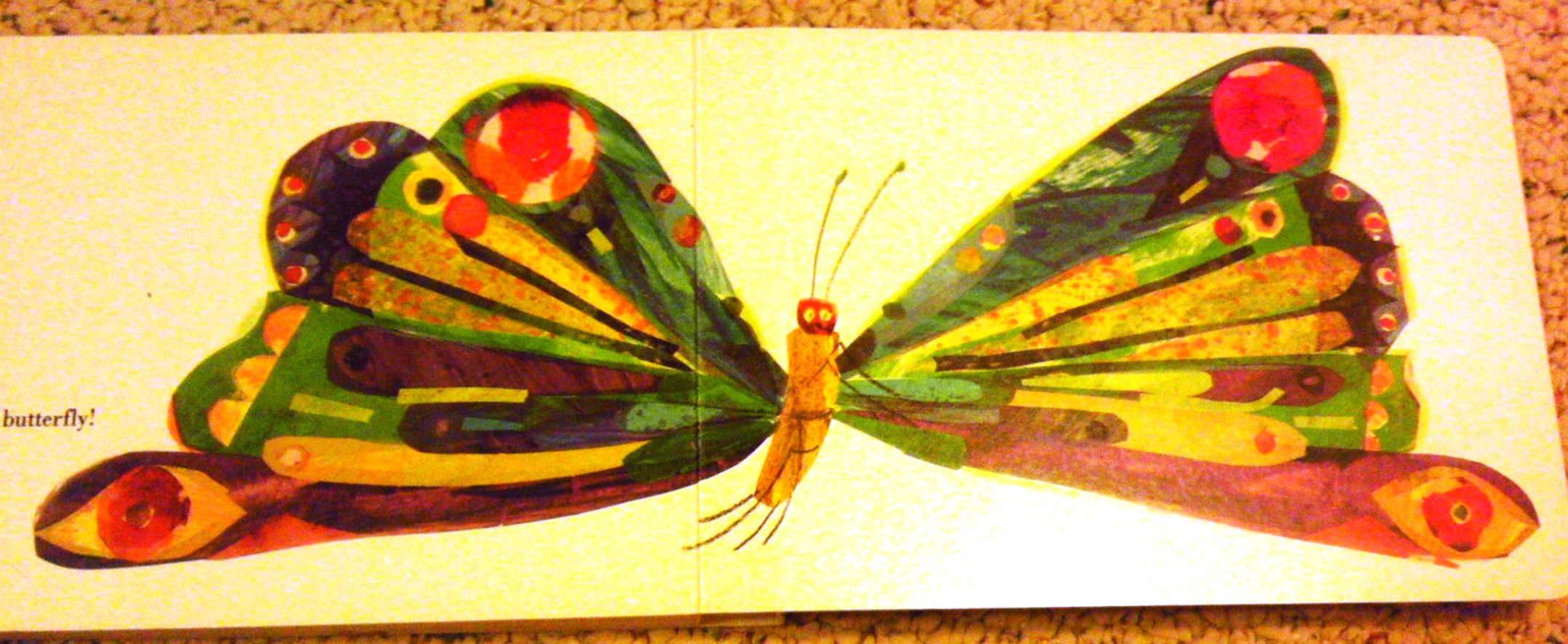
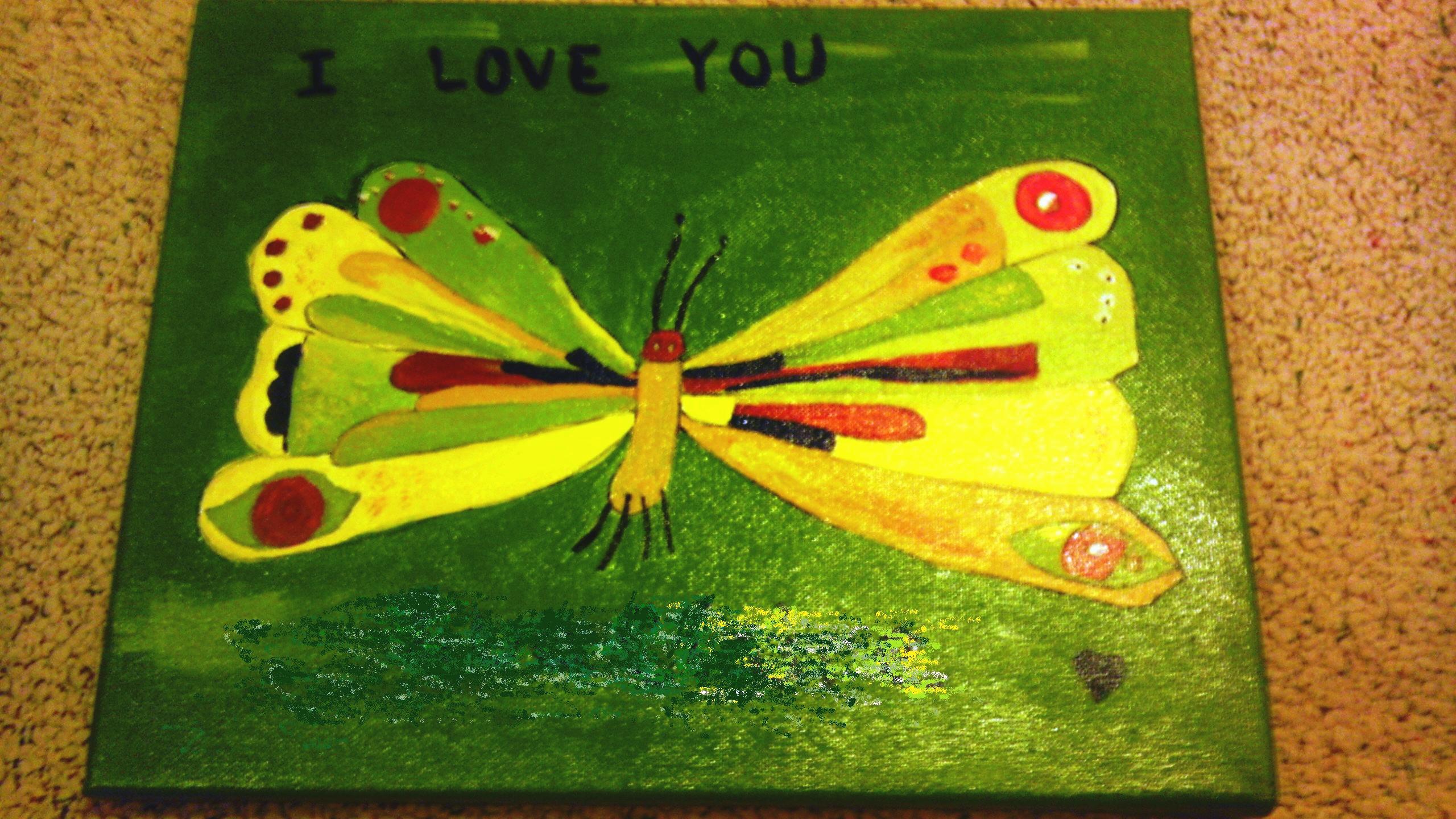
The two paintings were inspired by Eric Carle’s illustrations in two of his books. The Very Hungry Caterpillar and Panda Bear, Panda Bear, What Do You See?  From the The Very Hungry Caterpillar I chose the beautiful butterfly that the caterpillar turns into at the end of the story. Carle’s rendition of this butterfly is simply beautiful.

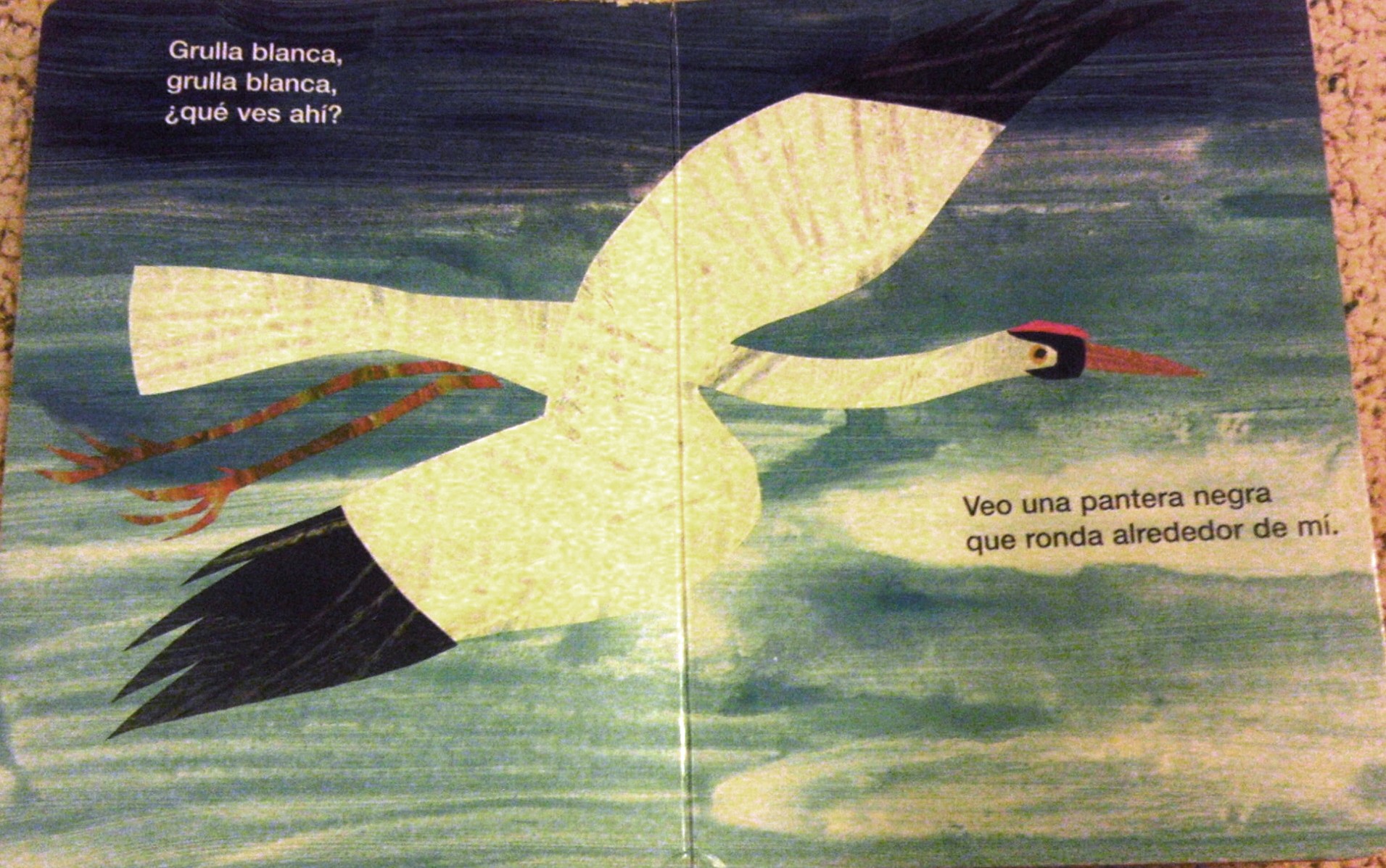
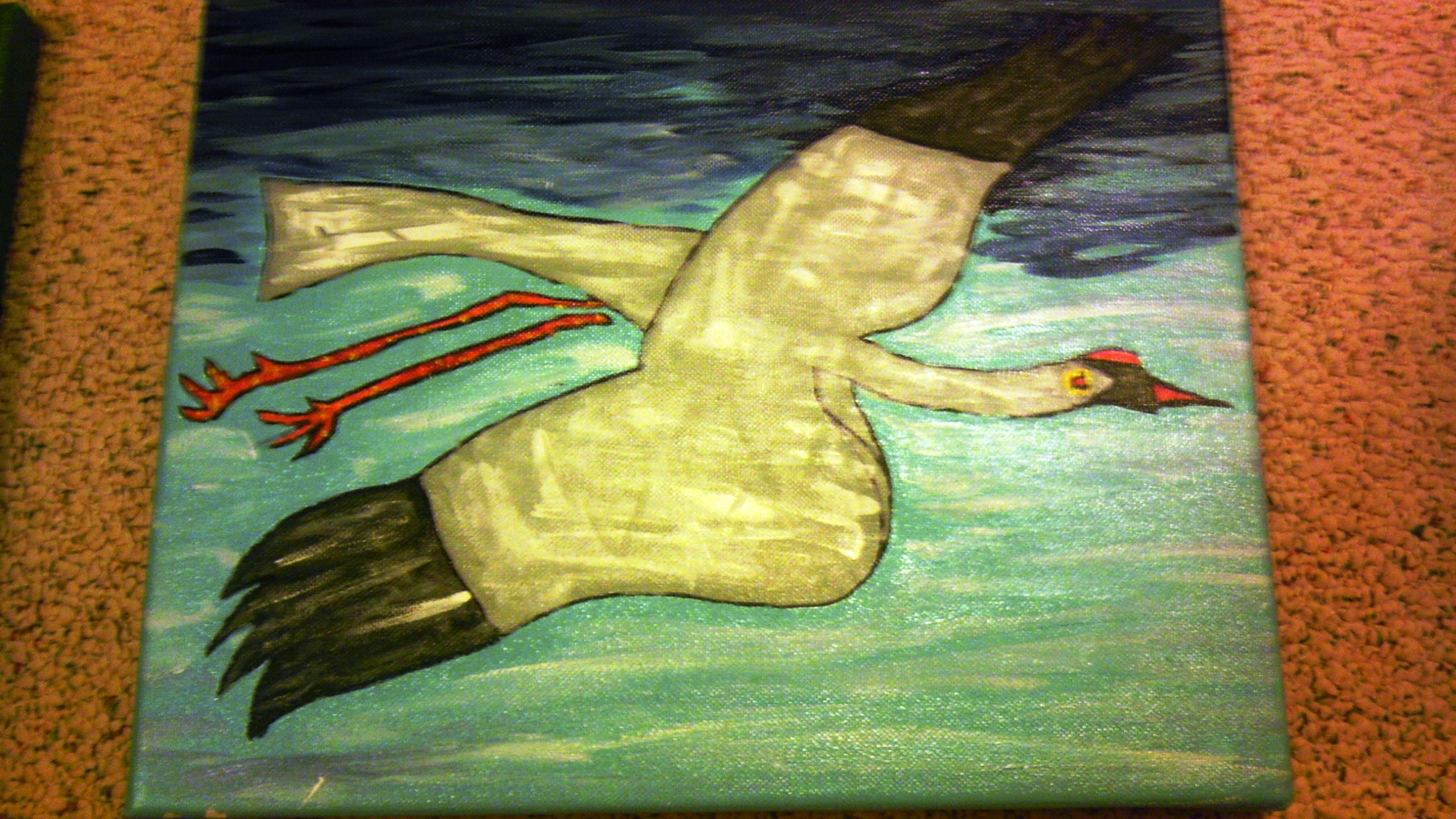
The second painting is of a crane in Panda Bear, Panda Bear, What Do You See?  I chose the crane for my daughter’s Godfather to paint because there is something about that crane that draws my child in. Whenever we read the book she always insists on turning back to that page.

Because she likes the crane so much, I thought it would be lovely to have a painting of it hanging on the wall behind her bed. We could look at the painting and talk about it while we read the book.

The paintings did not take much effort – even for two novices to acrylics. I had bought some canvasses and I sketched the outline of the animals onto the canvas. I had learned this technique from a local art studio that offers one night classes to adults who would like to paint. To actually create the paintings we then went to the studio for another one night class. The studio provides everything one needs: brushes, paints, easels, gentle instruction. It was quite enjoyable.

(There is an art studio in town called Simply Jane where you can go for a one night class called Paint with a Pint. Off we went with our bottle of wine, bags of chips, cookies and unpainted canvases. I had attended a class there before called Paint the Greats and the Sharpie idea came from there.)

We spent the next three hours with our bottle of wine, chips, easels and acrylics painting our pictures. The teacher then sprayed them with a glossy spray to protect the paint.

Here are the final products of our work. I think they look wonderful and I am so happy that I have them to offer up as a special gift.

Eric Carle’s butterfly:

My butterfly:

Eric Carle’s Crane:

Randy’s Crane:

I love these painting and I am sure my daughter will come to love these paintings as much as I do. Both will be hanging in her bedroom over her bed and hopefully she will cherish them forever.

But at the same time, it has occurred to me that although these paintings are a gift to my daughter, they are also a gift to me. For a brief moment they stop the clock at the age of three and they will hold a special meaning for me that even she will never be able to understand.

No matter how old my daughter becomes, whenever I look at those paintings I will remember what she was like as a three year old and how meaningful those images were to her at that time in her life.

I will remember parenting my little three year old girl and I will remember how she looked at them and said “Butterfly!” and “Geese!” when she was asked what they were.

They started out as a gift for her but in turn have become something even greater, a wonderful reminder of the fleeting moments of childhood and the special times we enjoy.

In the future, I hope that I am equally inspired to create some special gift that will stay with her for a lifetime and that will carve out a special place in my heart for me to revisit as my baby grows up and becomes a young woman.

Minneapolis Resources:

Here is Simply Jane’s Facebook page if you would like to see more:

http://www.facebook.com/pages/Simply-Jane/19831748624

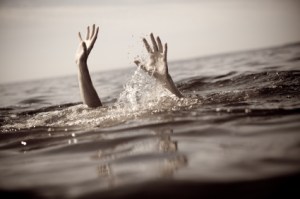
More on Water Safety: Drowning Doesn’t Look Like Drowning

Three children have already died this summer in Minnesota due to drowning incidents. These are two deaths that could have been prevented. One boy died while swimming IN A SWIMMING POOL with a lifeguard present.

Drowning is the Number 2 cause of accidental death in children under the age of 15.

From the article Drowning Doesn’t Look Like Drowning by Mario Vittone.

1. Of the approximately 750 children who will drown next year, about 375 of them will drown within 25 yards of a parent or other adult.

2. In ten percent of those drownings, the adult will actually watch them do it, having no idea it is happening (source: CDC).

3. Except in rare circumstances, drowning people are physiologically unable to call out for help. Their mouths alternately sink below and reappear above the surface of the water so they can’t speak.

5. Drowning people cannot voluntarily control their arm movements so they can’t wave for help, move toward a rescuer, or reach out for a piece of rescue equipment.

6. Their bodies remain upright in the water, with no evidence of a kick. Unless rescued they can only stay above water for 20 to 60 seconds before submersion occurs.

Look for these other signs of drowning when persons are in the water:

  • Head low in the water, mouth at water level
  • Head tilted back with mouth open
  • Eyes glassy and empty, unable to focus
  • Eyes closed
  • Hair over forehead or eyes
  • Not using legs – Vertical
  • Hyperventilating or gasping
  • Trying to swim in a particular direction but not making headway
  • Trying to roll over on the back
  • Ladder climb, rarely out of the water.

Sometimes the most common indication that someone is drowning is that they don’t look like they’re drowning.  They may just look like they are treading water and looking up at the deck.  One  way to be sure? 

1. Ask them: “Are you alright?” If they can answer at all – they probably are. 

2. If they return  a blank stare – you may have less than 30 seconds to get to them. 

3. And parents: children playing in the water make noise. When they get quiet, you get to them and find out why.

Here are the stories about the two little ones who died. One is the son of a co-worker in my building.

WINONA, Minn. — A 5-year-old girl drowned Monday evening at Goodview’s LaCanne Park.

Emily Margarita Lopez Leon, of Arcadia, Wis., was with her family at the LaCanne Park beach when family members noticed she was missing.

The emergency report of a child missing at the park was called in at 6:43 p.m. and a search of the park and lake was launched.

First responders used a human chain to walk the swimming area of the beach. The girl was located at approximately 7:30 p.m. in about three feet of water, about 60 feet from the shore within the roped swimming area.

She had been in the water between 35 and 45 minutes, according to Goodview Police Chief Kent Russell.

The child was transported to Winona Health, where she was pronounced dead.

Goodview police, first responders and firefighters, Winona police and firefighters, the Winona County Sheriff’s Department and Dive Rescue, Winona Area Ambulance and Medlink Air joined in the search.

http://www.startribune.com/local/west/156543495.html

A 6-year old boy drowned in a supervised pool while at a birthday party on Friday evening at Oak Ridege Country Club in Hopkins.

The boy was spotted unresponsive in the water by a lifeguard, and country club employees and members were performing CPR on him when police arrived. He was taken to Hennepin County Medical Center in Minneapolis, where he was pronounced dead.

Hopkins police Sgt. Michael Glassberg said it was not clear what led to the drowning and said he knew of no issues with equipment safety at the pool. The pool has deep and shallow ends, a slide and other features. Glassberg said he didn’t know how deep the water was where the boy was found.

The drowning is under investigation by Hopkins police and the Hennepin County sheriff. “This is obviously a tragic situation,” Glassberg said. “We just want to remind people about pool safety. Summer’s here. We just need to make sure we’re being safe.”

Girl drowns in above-ground swimming pool in Minnesota

Published June 07, 2012, 06:11 PM

CHISAGO, Minn. — A toddler has drowned in an above-ground swimming pool after wandering outside her family’s home in east-central Minnesota.

The Chisago County sheriff’s office was called to a home south of Chisago City around 5:40 p.m. Wednesday on a report of a 14-month-old drowning victim. When sheriff’s officials arrived they found a neighbor who also is a nurse performing CPR on the girl.

The girl was pronounced dead in an emergency room. Her name was not immediately released.

Authorities say the girl’s father was outside working while his wife was inside with the children. He says his wife thought the girl was upstairs playing with her two older sisters.

The victim drowned in the shallow end of the pool. She may have been unaccounted for about a half-hour.

Summer Viritual Reading Club: Join the Fun and Help Your Child Succeed in School!

Did you know that reading to your chidlren is the best thing that you can do for their education? Kids that are read to consistently by their parents do better in school and on tests of math and English than children who did not have that experience.

Are you looking for something to do this summer with your kids while they are out of school?

This looks like such a fun idea!

Here’s the info from Inspiriation Laboratories, a blog about creativity and play for children.

My son and I love to read.  We enjoy finding new books and reading favorites over and over again.  Many of the activities we do are inspired by the books we read.  This summer we are joining a group of bloggers for a virtual book club.  Each month we will share books and activities from a different children’s author.

The Summer Virtual Book Club for Kids begins with Mo Willems as the featured author.

I must confess that I have only read a couple of his books and I have yet to read any of them with my son…so I am very excited about this!

Would you like to join us?

  1. Choose a book by Mo Willems.  {Have your kids help you pick a new one or choose your favorite to read.}
  2. Be inspired by the book and complete a related activity {project, craft, recipe, etc.}.
  3. On Monday, June 18th, come here to share your book and activities at our Mo Willems Blog Hop.

To get inspired, I’ve compiled a list of books by Mo Willems.  So many from which to choose!!

1. Don’t let the Pidgeon Drive the Bus!

2. Knuffle Bunny

3. We are in a Book!

4. Cat the Cat, Who is that?

5. Don’t let the Pigeon Stay up Late!

That’s just five of them. If you want to see the rest go to Inspiration Laboratories or to any other online bookstore, in person bookstore or library!

Yet Another Toddler in a Washing Machine? Water Safety Tips for Babies and Tots

The video of the toddler rolling around in the Laundromat washing machine is a little bit too much to handle. And a little too much of plain old stupidity for me.

http://shine.yahoo.com/parenting/worst-parent-week-dad-puts-toddler-washing-machine-183500809.html

But safety tips….that I can take.

Everyone has heard that a child can drown in a few inches of water. Having worked during my college days for the Consumer Product Safety Commission as a data entry person, nothing surprises me. Children can die or be severely harmed by all kinds of household objects, not just toys.

If you’ve heard it once, you’ll hear it again. NEVER leave your child unattended in or around water. I just get sick to my stomach when I hear about young children dying in hot tubs or washing machines…You cannot be too careful.

Warnings about Child Safety by Angela Haupt at Yahoo:

Between 2005 and 2009, two children under the age of five died as a result of laundry room accidents, according to the Consumer Product Safety Commission.

Washing machine-related injuries are more common than deaths, says Scott Wolfson, director of public affairs for the CPSCburns from hot water in the machine, or injuries to their limbs if they come into contact with a rapidly spinning basin. “Kids are curious. We have to be very vigilant about our children, and really live in the moment and be present when we’re supervising them,” says Kate Carr, president of Safe Kids Worldwide, which aims to prevent unintentional childhood injuries.

Five other things to be cautious of:

Standing water. Drowning concerns extend beyond swimming pools. Any type of standing water-even if it’s just an inch deep-can harm a child. “The bathroom is the riskiest room in the house,” says Garry Gardner, chair of the American Academy of Pediatrics’ council on injury, violence, and poison prevention. “Children lean over and look into the toilet or bathtub, they trip, and they fall in.” Keep young children out of the bathroom unless they’re being closely watched, and teach others in the home to keep the bathroom door closed at all times. Ice chests with melted ice, water buckets or pails, and whirlpools also pose risks. Empty all buckets, pails, and bathtubs completely after use; never leave them filled or unattended. And adjust the water heater thermostat so that the hottest temperature at the faucet is 120 degrees Fahrenheit, to help avoid burns.

Televisions. Between 2000 and 2010, nearly 170 children ages 8 and younger were fatally crushed by falling TVs, the CPSC reports One child, for example, bumped a 100-pound TV that was placed on an aquarium stand. When it fell, it crushed his skull. The best preventative step? Using adequately-sized, sturdy stands and shelves to support TVs. They should not be placed on stands that have drawers, since kids could use them as steps to climb to the top, and parents shouldn’t put remote controls, toys, or anything else atop TV sets. “We’re seeing a mini-epidemic,” Gardner says. “If a TV is heavy and sitting on a small stand, and a kid climbs up on it, he’s going to pull it right over.”

Button batteries. These high-powered lithium batteries, no bigger than a nickle, are used to power small electronic devices, including remote controls, watches, musical greeting cards, and ornaments. When accidently swallowed, they can get stuck in the esophagus and generate an electrical current that causes severe chemical burns and tissue damage. “The window of opportunity for getting it out before it causes irreparable damage is two hours,” Gardner says. If you’re even remotely concerned that your child has ingested one of the batteries, head to the emergency room immediately.

Treadmills. In 2009, Mike Tyson’s 4-year-old daughter was strangled to death by a dangling treadmill cord. And it wasn’t an isolated accident. More than 25,000 children under age 14 are injured each year by exercise equipment, including stationary bikes, treadmills, and stair climbers. Treadmill injuries are typically caused by the moving parts (like the running deck and belt), hard edges, and programmed speeds. Some precautionary steps: When a treadmill isn’t in use, unplug it and lock it up, or even surround it with a safety gate. Remove the safety clip that’s tied around the handrail. Keep kids away from the machine whenever it’s in use.

Coffee. Be wary of where you set down that morning cup of joe. A child could accidently tip it over. Burns, especially scalds from hot water and other liquids, are some of the most common childhood accidents. “Kids are not small adults. Because they’re growing, their skin is more fragile,” Carr says. “And their body surface is much smaller, so a little bit of coffee goes a long way.”

More tips from the HealthEast Maternity Care Newsletter:

Did you know?
Drowning is the second most common cause of injury-related fatalities among children between the ages of 1 and 4. The best prevention of drowning is never to let children be alone near water of any depth.

Swimming: safety first
A child can drown in a minute. In fact, most young children who drowned in swimming pools were in the care of one or both parents at the time and had been out of sight for less than five minutes. While teaching your toddler water safety and, ultimately, to swim will eventually protect him, careful and constant supervision is essential to prevent drowning now.

Teaching your toddler water safety can be fun for both of you. Enroll in a YMCA swimming class for parents and toddlers to learn water safety and have fun. No matter how much your toddler loves the water, however, he must always be within an arm’s reach until he is over 5 years of age and a strong swimmer-even if you are just in a backyard wading pool. If your child is fearful of the water, don’t force him to swim, as doing so may increase his fear.

Water play
There are endless ways to enjoy the water with your toddler. Sit in a kiddy pool with her in just an inch or two of water and pass a ball back and forth between you. Fill or empty cups as you would in the sink or tub. In the shallow end of an adult pool, hold her in your arms and bounce together in the water while singing Ring Around the Rosie. If your child has a fear of water but is comfortable in your arms, you can offer her the choice of falling up (out of the water) or down (submerged no higher than her chest).”

I know you’re thinking that this is all old news. But if it helps save one toddlers life, it’s worth it.

DOCUMENTARY Play Again: What are the consequences of a child removed from nature?

http://playagainfilm.com/film-synopsis/Image

This is an amazing documentary about children who are “wired in” for seriously long periods of time a day. Hundreds of texts every day, hours in front of the computer screen, gaming, on-line chats. For some of them, the computeer is their social life. Chidlren who have difficulty connecting to other children socially may also fall prey to this easy way of what feels like connecting to others.

Humans have an innate need to connect to other people. Their survival and well-being depends on it. For children who may be on the margins (obese, socially inept, shy), the world of computers leaves their deficits and the reality of social interactions behind.

If you get a chance to view this documentary I would highly recommend it. It can also be purchased for a reasonable price and you and parents in your social circle could view it together and have a discussion.

Synopsis(CineSinopsis)

From the website:

http://playagainfilm.com/film-synopsis/

“One generation from now most people in the U.S. will have spent more time in the virtual world than in nature. New media technologies have improved our lives in countless ways. Information now appears with a click. Overseas friends are part of our daily lives. And even grandma loves Wii.

But what are we missing when we are behind screens? And how will this impact our children, our society, and eventually, our planet? At a time when children play more behind screens than outside, PLAY AGAIN explores the changing balance between the virtual and natural worlds. Is our connection to nature disappearing down the digital rabbit hole?

This moving and humorous documentary follows six teenagers who, like the “average American child,” spend five to fifteen hours a day behind screens. PLAY AGAIN unplugs these teens and takes them on their first wilderness adventure – no electricity, no cell phone coverage, no virtual reality.

Through the voices of children and leading experts including journalist Richard Louv, sociologist Juliet Schor, environmental writer Bill McKibben, educators Diane Levin and Nancy Carlsson-Paige, neuroscientist Gary Small, parks advocate Charles Jordan, and geneticist David Suzuki, PLAY AGAIN investigates the consequences of a childhood removed from nature and encourages action for a sustainable future.

Where we are coming from

Seventy years ago, the first televisions became commercially available. The first desktop computers went on sale 30 years ago, and the first cell phones a mere 15 years ago. During their relatively short tenure these three technologies have changed the way we live. Some of these changes are good. Television can now rapidly disseminate vital information. Computers turned that flow of information into a two-way street. Cell phones enable unprecedented connectivity with our fellow human beings. And the merging of cell phones and the internet has even allowed protest movements around the world to organize and thrive.

But there’s also a down side. For many people, especially children, screens have become the de facto medium by which the greater world is experienced. A virtual world of digitally transmitted pictures, voices, and scenarios has become more real to this generation than the world of sun, water, air, and living organisms, including fellow humans.

The average American child now spends over eight hours in front of a screen each day. She emails, texts, and updates her status incessantly. He can name hundreds of corporate logos, but less than ten native plants. She aspires to have hundreds of online friends, most she may never meet in person.  He masters complicated situations presented in game after game, but often avoids simple person-to-person conversation. They are almost entirely out of contact with the world that, over millions of years of evolution, shaped human beings — the natural world.

The long-term consequences of this experiment on human development remain to be seen, but the stakes couldn’t be higher. By most accounts, this generation will face multiple crises — environmental, economic and social. Will this screen world — and its bevy of virtual experiences — have adequately prepared these “digital natives” to address the problems they’ll face, problems on whose resolution their own survival may depend?

As we stand at a turning point in our relationship with earth, we find ourselves immersed in the gray area between the natural and virtual worlds. From a global perspective of wonder and hope, PLAY AGAIN examines this unique point in history.”

RELATED POSTS:
CHILDREN AND SCREEN TIME

Can an iTunes App Teach your Child to Speak? Parenting Magazine Thinks So

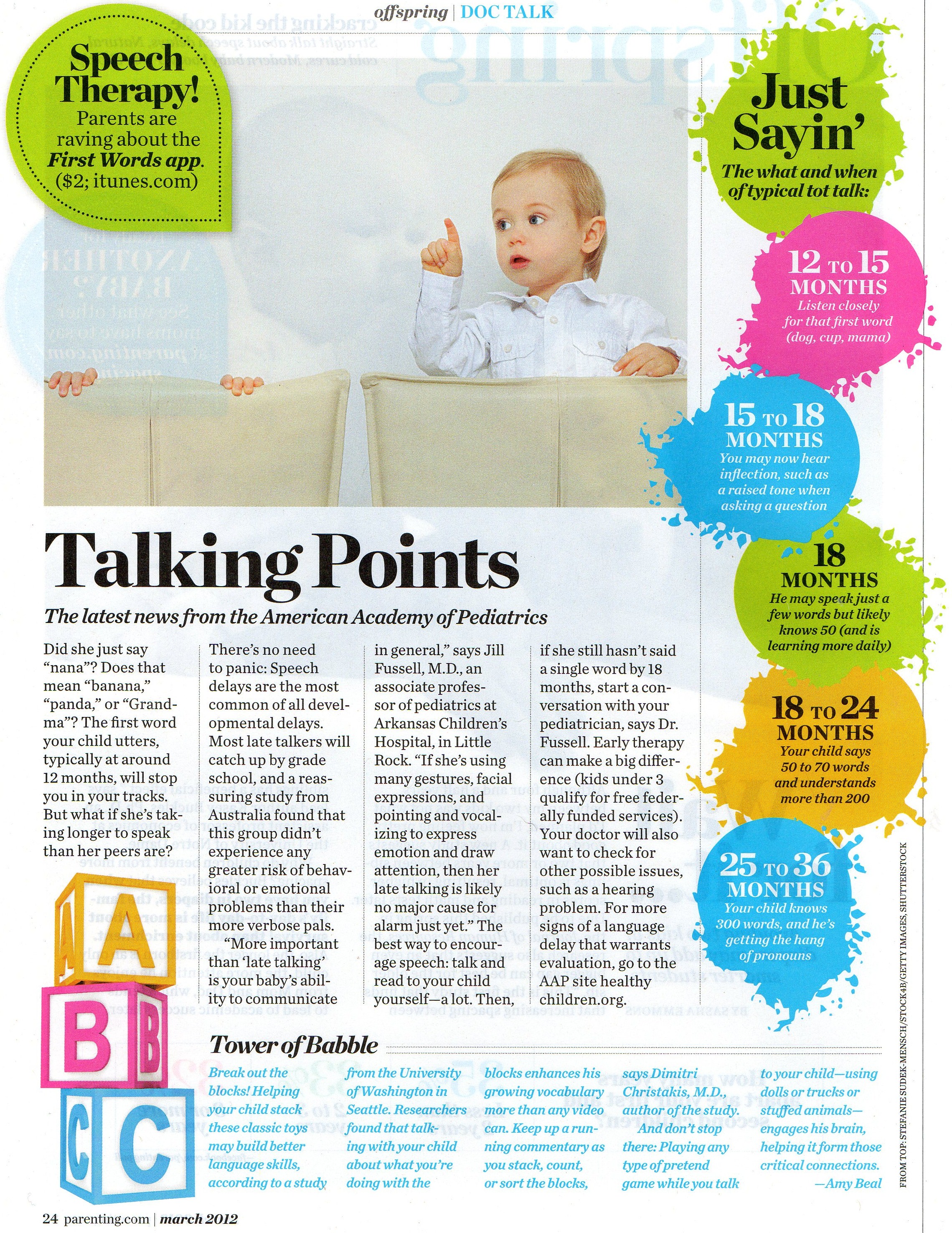
I was breezing through the March 2012 issue of Parenting Magazine and an article by Amy Beal entitled “Talking Points: The Latest News from the American Academy of Pediatrics” caught my eye. The article is informative enough and gives some good advice on children who may start speaking at a later than average age. Embedded in the article is a brief sentence on advice to parents when there is a concern. The advice is “The best way to encourage speech: talk and read to your child yourself – a lot.” I’m doubtful most parents make it that far into the article.

Image

This brief sentence buried in the fine print is the best advice that can be given. Children learn to speak by hearing other adults speak and by modeling of speach. The only way children are going to learn to speak is by hearing other people speak. Speaking slowly, mimicking what the child is saying, reinforcing speech through positive reinforcement: these are all ways to help children produce speech. Here’s a good piece on ways to teach your baby language naturally on iVillage published in 2011. (Baby talk: 8 easy and fun ways to improve you baby’s language skills.) The tips include: talking to your baby, respond to your baby’s cries,  have “conversations with your baby,” talk naturally to your baby, extend her language and describe what you see her doing, sing songs, read books, etc. You’ll notice that technology didn’t make its way into the tips.

READING BOOKS IS THE MOST IMPORTANT THING YOU CAN DO FOR YOUR CHILD’S LANGUAGE SKILLS.

Reading to your child is the greatest predictor of academic success later in life. The more children are read to as young children, the better they do in school later. Make time in your day to read to your child.

As proof of this point, I was just reading in a sociology textbook about children who were not exposed to language for the first several years of their lives. One was the case of a girl who was locked in the attic with her deaf mother for the first six years of her life. Sociologists use this case as an example of understanding that language is not something that will be acquired simply by being born – it must be learned from the environment and particularly from the child’s caregivers.

My Outrage? iPhone as Speech Therapist.

This brief article was an okay overview of speech delays. What outraged me about the page in the magazine was the little “speech bubble” in the upper right hand corner that has a baby pointing to it. The little bubble says “Speech Therapy! Parents are raving about the First Words app. ($2: itunes.com). It is bright, it will capture the reader’s eye and it may be the only thing a reader sees and takes away from this page.

I almost had a heart attack when I saw this bubble. Why on earth is Parenting Magazine promoting an iTunes app to teach your baby to speak, especially given the information that was just provided that tells readers that babies learn to speak from other humans?

Let’s take a look at the many problems in this brief little advertising gimmick:

What is a parent more likely to do? Read the whole article in small print or read the speech bubble that tells you an iTunes app will teach your child to speak?

  1. Is it just me or isn’t it slightly irresponsible for Parenting Magazine to promote a $2.00 iTunes app as “Speech Therapy.”
  2. Apps are super popular, right? If you were a parent of a child with a slight delay in speech, wouldn’t you pick up your iPhone and download the app? What parent wouldn’t? (Well, I wouldn’t but that’s just me and hopefully some other mothers and fathers out there.) The majority would though, I’d bet. I’ve seen a lot of parents  grasp at any straw they can when it comes to a developmental issue with their child.
  3. Doesn’t the green bubble directly contradict what the American Academy of Pediatrics recommends? The article and what we know about speech development recommends that parents and other humans teach children to speak, not phones. Any time spent that the child spends looking at an iPhone or some other electronic device is time that is not spent face-to-face with a human being.
  4. Speech therapists are probably not using things like iPhone apps to teach children to learn to speak. When I was observing speech therapists who were working with young children I did not see any electronic devices. (Granted that was 10 years ago, but I doubt things have changed that much, especially when it comes to small children, birth to three.)

As a society we need to separate out the sexy allure of technology from parenting in ways that are natural and proven to be effective. There’s an unethical blending of the two that occurs, particularly in the media.

Years of experience show us that the media is the strongest influence over how a society develops and identifies itself. Let us not be consumed and swayed by that.

If we as consumers of the media fall pray to such irresponsible advertising, especially when it comes to our most precious commodity – our children – then I am very worried about the future. Please act responsibly and be an informed and discriminating consumer of the media. There is no panacea for things like speech delay and speech acquisition. If a $2.00 iTunes app could solve the problems of child speech delays then there would be no need for speech therapists and there would be very few children with speech delays.

It’s a gimmick and it leads parents to believe that technology is the answer…even when it’s not.

Furthermore, wouldn’t you rather teach your child to speak than a telephone app?

I know I would.

RELATED POSTS:
CHILDREN AND SCREEN TIME