Breastfeeding in the ICU: Medically Unavailable Mother

NICU-Mom-bfing-150x150

http://theleakyboob.com/2012/04/breastfeeding-the-icu-support-and-facebook-support-that-keeps-on-giving/

When Serena Tremblay responded to a call to share breastfeeding photos on The Leaky Boob Facebook wall, she didn’t think she was sharing anything extraordinary as she sat at the computer with both her sons, Gooney Bear-17 months  and Gorgeous-3 years, with her and her husband making dinner.  It was the first breastfeeding photo she had of Gooney Bear and she just wanted to share.  Including a bit of explanation, the Alberta, Canada mom celebrated her breastfeeding success with the community on The Leaky Boob:

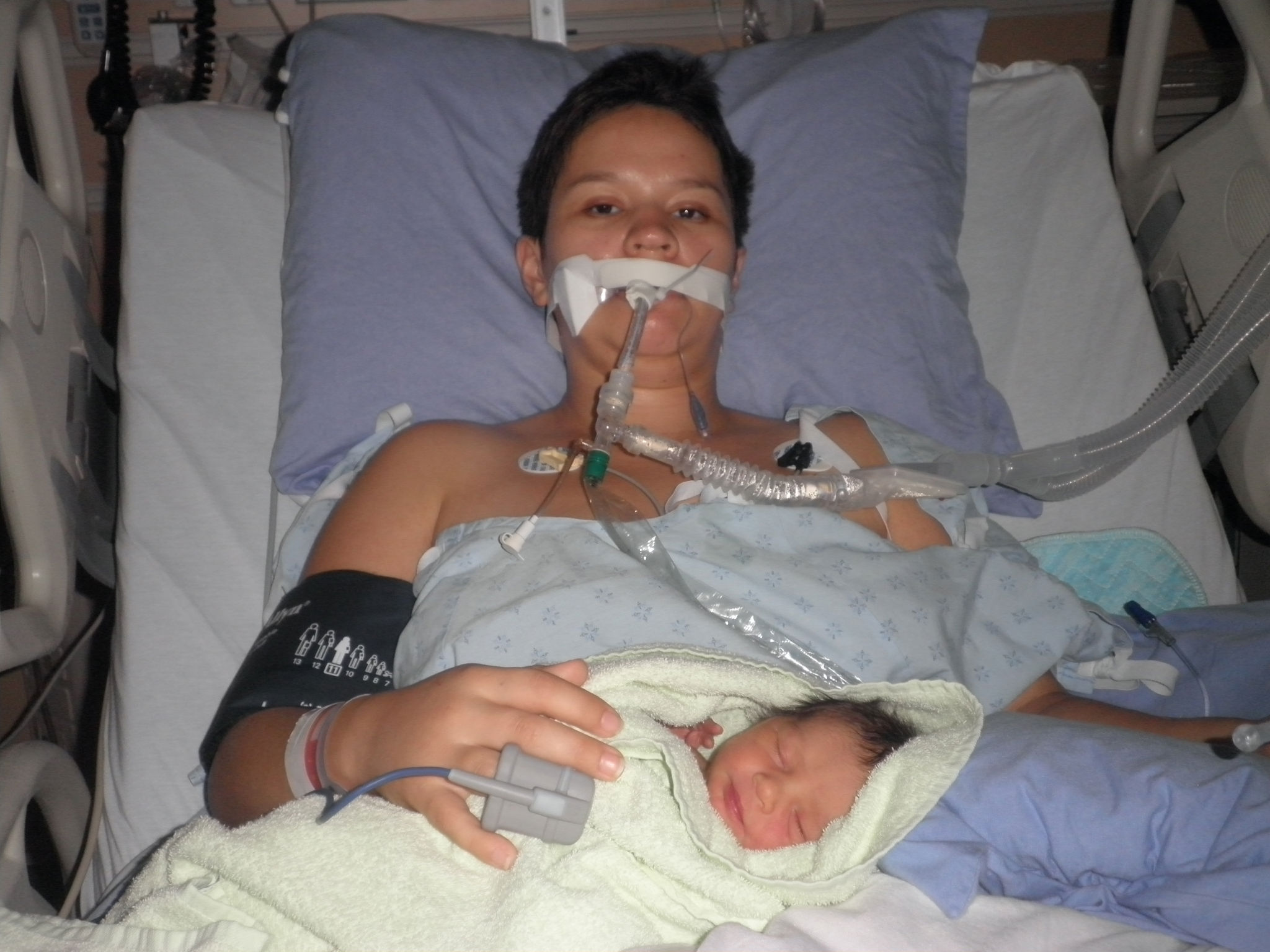
“A nurse helping my 1 day old son nurse while I was in the ICU following his birth. At this point I was a quadriplegic and could only feel his soft hair and skin when he was placed by my neck to cuddle. Breastfeeding is the reason he was allowed to stay with me in the hospital for 5 months while I lived on the physical rehabilitation unit learning how to walk again (complications from when he was born). It’s amazing how much baby stuff you can fit in a hospital room. We are still breastfeeding strong at 16 months! If this is not a success story I don’t know what is :D

Within minutes there were hundreds of responses and within hours, thousands of shares.  The photo went viral, moving across the internet as an inspirational image and celebrating not just one woman’s breastfeeding success story against all odds, but celebrating every breastfeeding success story for all women.

Even if that photo captured Gooney Bear’s one and only feeding at the breast, this is a breastfeeding success story.  As it is, however, Gooney Bear is now 17 months old and still breastfeeding and these weren’t the only issues Serena and Gooney Bear had to overcome.  Together the pair battled tongue tie for 9 weeks, needing to use a nipple shield, dairy, soy, and gluten sensitivities, and all that on top of the 5 months Serena was hospitalized.

The magnitude of attention sharing this one photo received was a bit overwhelming for Serena.  To her, while this photo documents a personal success story and extraordinary time in her own life, it is also something that just is.  We don’t always realize how our stories, our struggles and triumphs, can impact someone else.  People were so inspired by Serena’s photo; moms told her they were getting ready to quit breastfeeding due to difficulties and her photo encouraged them to find a way to keep going.

“Someone else is in tears, not sure they can keep going, but they see my picture and they think they can do it, they can get through what they are struggling with.”  Said Serena when she and I talked on the phone last week.

The result of a rare birth injury, Serena was fully quadriplegic after the birth of her second son on October 19, 2010.  Her memory of everything following his birth is full of different events but lots of holes and no sequential order.  She was intubated, lucid, in the ICU, and could only feel sensation from her neck up.  The nurses and her husband would place Gooney Bear in the crook of her neck so he could snuggle and so she could feel him at least a little.

Nobody really knew what to expect for Serena’s recovery.  She regained the use of her arms on day 2 and finally saw Gorgeous again for the first time on the 24th, 5 days after the birth of his little brother.

“One of the hardest moments I’ve ever gone through, you know?  When he walked into the room, it felt like he was shy and didn’t know me anymore.  He was 22 months at that time.  After a little bit he came and sat on the bed with me and had a snuggle.  It was very hard.”  She shared.
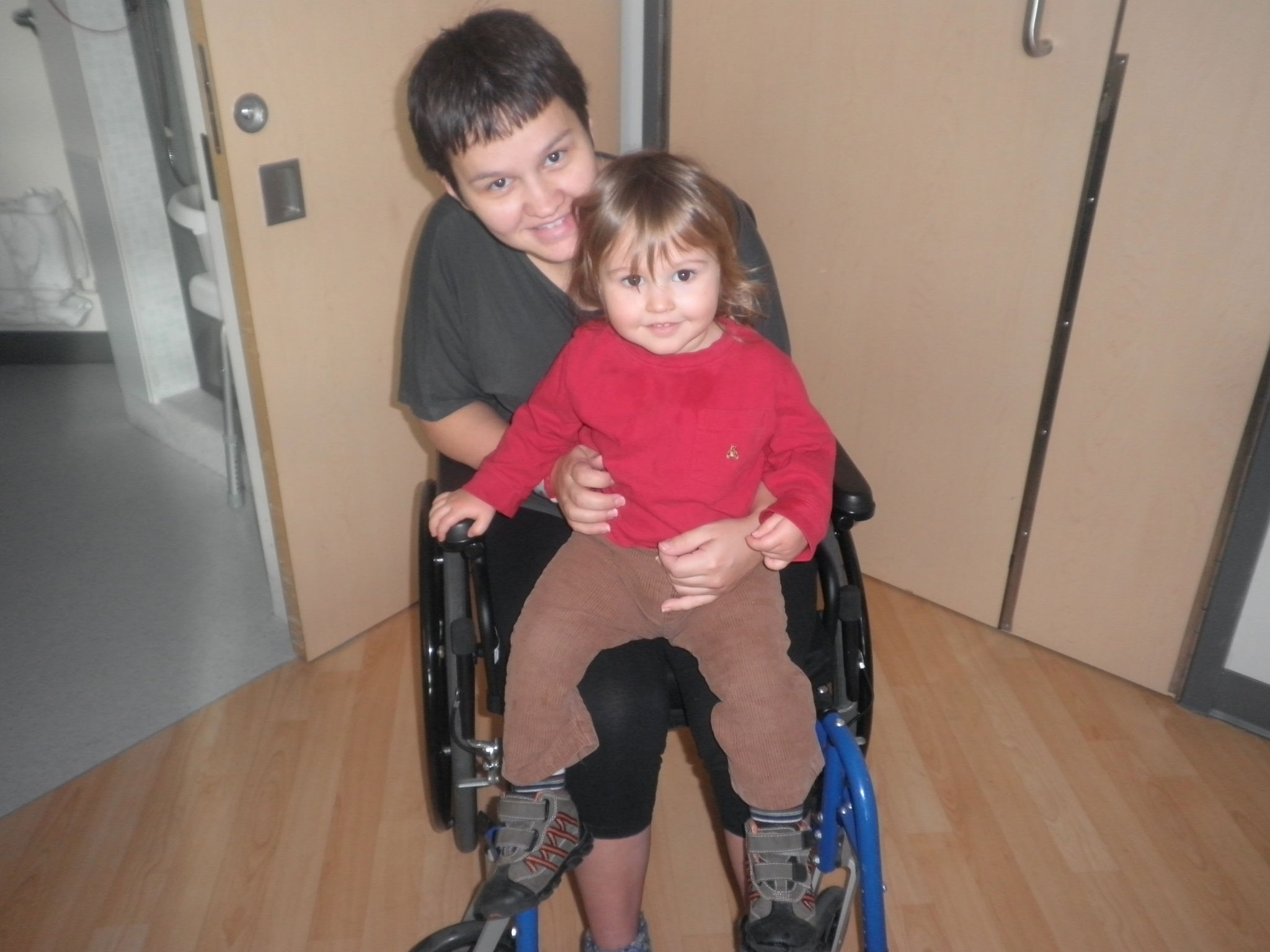
There’s no doubt Serena Tremblay is an incredibly strong woman.  Fighting an uphill battle with her body, she never gave up.  But she says that’s not how she got through that difficult time.

So how did she get through it?  In talking with Serena one main theme emerged: support.  Her husband.  The nurses.  Her family.  The other patients on the rehabilitation floor when she moved there.  Family members of other patients.  The hospital volunteers.  The lactation consultant.  How did she get through it?  With support.  Lots and lots of support.

In the face of not knowing what was going to happen to his wife, Serena’s husband, a heavy duty mechanic, stayed with her and then with Gooney Bear.  When she was in the ICU, he slept in her bed on the maternity ward so he could be with their baby.  He advocated for breastfeeding for the pair and he and the nurses took turns helping their precious baby boy latch.  Without asking, he took pictures, a bunch of pictures and that’s how the first feed was captured on film, something for which Serena is very thankful.

Support.

The nurses on the maternity ward went above and beyond, the first nurse coming down to hand express Serena so her little boy could have his mom’s colostrum that first day.  There is much love and gratitude in Serena’s voice as she speaks of her nurses, they were heros that got her through every day.  From that time hand expressing her milk, the nurses just kept bringing the baby over on demand, whenever he was hungry, to the ICU to breastfeed until her husband or grandmother could help her or she could do it herself.

Support.

Never once did she hear anyone say “why don’t you just put him on the bottle.”  People said that, people that weren’t involved, but not the nursing staff.

Support.

It’s clear to Serena not only how she got through, but how she went on to have a positive and ongoing successful breastfeeding experience with Gooney Bear.  ”Support, support, support.  I’d like to narrow it down and say it was one person but it was everyone.  Why am I successful?  Probably only because of support and because I was determined, I just wanted to do it. Gooney Bear was able to stay with me in the hospital because I chose to breastfeed.  If we had given him bottles they would have sent him home with my husband.”

At a time when nurses, doctors, and hospitals often get a bad rap about providing insufficient breastfeeding support and sometimes down right sabotaging breastfeeding relationships, Serena’s story not only offers encouragement for moms encountering breastfeeding struggles or indeed as a testimony to the strength of the human spirit; her story also gives hope for what true breastfeeding support in the hospital can look like.  Serena’s hospital didn’t realize at the time, but they’ve gone on to provide breastfeeding support extending well beyond this one patient.

When her tube was removed and she was finally able to speak, Serena refused to say anything until she was holding Gooney Bear: she had yet to tell him she loved him.

“I wouldn’t speak to the nurses because I wanted my first words to be ‘I love you Gooney Bear.”
Through out her 5 month hospital stay, ICU for 4 days, maternity ward for 1 month, and the rehabilitation unit for 4 months; Serena was able to keep Gooney Bear with her, breastfeeding on demand and pumping for him to have expressed milk while she was at one of her regular therapy appointments.  Managing her way around the ward and even the whole hospital, Serena says how it’s amazing how much you can do in a wheelchair with a nursing pillow and a baby on your lap.  Often a breastfeeding baby.  During that time she dealt with many of the common issues breastfeeding moms face.  Once a nurse pulled a double shift and helped care for Gooney Bear during the night so she could work to get rid of a stubborn clogged duct before it turned into mastitis.  Even for the regular every day challenges of parenting life she had support, the nurses and other patients or family of patients would take turns holding Serena’s little guy so she could eat, after all, who would turn down cuddling a precious baby?

Today many of those relationships continue, their support and all that Serena and Gooney Bear gave back formed bonds of friendship that last.  Friends from the rehabilitation unit remain in their lives.  Serena and her family go back and visit the hospital staff regularly and they are all happy to see them, often crying at the progress Serena has made since she left the hospital over a year ago.  Her recovery has been remarkable and though it’s ongoing she’s accomplished so much and doesn’t take for granted what she can do.  Their family is like any other family, they like to do things every normal family likes to do, “we just have to do them a little differently” Serena shares.  Their friends understand, they were there, they have seen where they’ve come from, they supported them in the journey and in the ongoing part of that journey today.


One of the nurses that helped Serena so much is expecting her first baby soon.  Serena is looking forward to being able to support her now, encourage her in her own breastfeeding and parenting journey.  Understanding how crucial support is, Serena is already there.

“It was a horrible thing and I wish it hadn’t happen – but it did and so many good things came about from it… if my story can help one mom to get support, receive support, or give support then it was worth it.”  And so Serena shares her photo and her story.

Sometimes I am asked why people share breastfeeding photos on Facebook and other social media settings.  This is why.  It’s celebrating our personal triumphs- whatever they may be; sharing a special moment, encouraging the global community of mothers by normalizing breastfeeding, inspiring others, and giving support.  Thousands of people have been inspired and encouraged by one photo with a simple caption.  Our stories make a difference and if a picture is worth a thousand words then sharing breastfeeding photos is like breastfeeding support spreading exponentially around the world.  In the global community we’ve moved on to via the internet, sharing our photos and stories online can often be the start of support for someone.  Just ask Serena, you never know how one image can make a difference.


My gratitude to Serena for being so brave in sharing the original photo in the first place and then to be willing to open up and share more of her story for my readers here.  All photos in this post are the property of Serena Tremblay and used with permission.  To protect the privacy of her family, Serena opted to use nicknames for her children and as the details regarding the birth injury were not important to the point of the story, she asked that they not be included in this article.  With an open medical investigation into Serena’s case, we appreciate your respect of her privacy on these details.  ~Jessica 


Keeping Your Kids Safe in the Age of the Internet: Computer Monitoring

Gecko Image

–Guest Post By GeckoMonitor.com

As your kids grow from toddlers to pre-teens, then on into their teenage years, their interest in the digital world of computers and the internet will grow and grow. For parents, this creates another worry that we really don’t need! There are a ton of problems and dilemmas that computers can bring into our lives, starting with how we let our kids use the internet safely, without seeing content that they really shouldn’t be seeing.

Of course, digital problems go a lot further than that. We have kids who say they are doing homework in their rooms when they are really playing video games or teenagers who are growing curious and looking up things about gambling or alcohol. Younger children can be at risk too, from online predators who chat to strangers in chat rooms, to random strangers trying to befriend your children through social networking sites. However old your child, there almost always will be times when concern grows over the use of the internet.

But there are ways to make parents’ lives easier. As the use of computers and the internet has grown, as have the tools out there for helping us with our everyday digital lives. Two of these types of tools in particular can help when it comes to kids and computers. The first is parental control software, which can be used to block and filter out certain ‘unwanted’ websites when kids are using the computer. This type of application will scan a webpage before it is shown for any keywords related to promiscuity, alcohol, gambling, etc., and if any are found the page is blocked. Most applications of this type can be setup for your child’s age and just how strict you’d like to be with their browsing behavior.

The second type of application that can help is computer monitoring software. This type of software does exactly what it says on the tin; it monitors computer use. You can use Computer Monitoring Software to keep tabs on everything that happens on your child’s computer, and look over the reports and logs at a later date to see if anything out of place has happened.

Everything that goes on that machine is logged, including websites visited, applications used, everything typed, documents opened/saved and anything printed. Screenshots are also taken, so you can see exactly what they see on the screen. This means that any chat/IM conversation, Facebook activity or email sent or received will be logged by the software for you to check over at a later date. You can even have the logs sent to you via email, if you wanted to check up on them while you’re at work or away from home.

Computer Monitoring Software can work either visibly or stealthily, it’s up to you. And either way the software will be password protected, so only you can access it. If you want the software working in stealth mode, anyone using the computer will have no idea they are being monitored, with no sign of the software in the start menu, task manager or program files directory etc. In visible mode, computer monitoring software could simply be used as a deterrent to unwanted behavior when you’re away.

If you’d like to download a free trial of Computer Monitoring Software with all the features mentioned above, head to the Gecko Monitor website at http://www.geckomonitor.com

(Free software giveaway to come!)

My New Favorite Quote on Co-Sleeping and Attachment-Based Parenting Practices

CoolPix 145

“Prop them up now so they can stand on their own later…”

—Christina Robert

The other day on a mothering blog someone was wondering how to get her three year old to stop screaming in her crib at night when the lights were turned out. She said she didn’t want her child to get “attached to co-sleeping” because she was three (which I am assuming means she wants to prioritize independence and self-reliance).

I replied that her child might be screaming when she is put in her crib because she is frightened. She might need the emotional support of her primary caregiver right now. I think so many people believe that it is important to “toughen up” our young children; to prepare them for the harsh realities that the world has to offer; to make them independent and strong as soon as possible.

I think that one of the greatest misunderstandings about attachment theory and the parenting practices that arise out of these theories is that the parenting adults do not want to help in the creation of strong and independent children. In actuality, they do. Just not at the age of three and not in this manner.

Between birth and five there is so much is going on neurologically in a child’s brain that it is almost unfathomable. These critical years set the stage for a child’s patterns of behavior. Their brains are developing at a quick pace and they are learning important physcial, social and emotional skills–all this and so much more. These are the vulnerable and the impressionable years. These are the years that children need to learn they can trust adults to meet their needs. This will serve as the foundation for their interactions with other children and other adults in the future..

The commonly-held misconception that children who sleep in their parent’s bed, or whose emotional needs are met consistently year after year, will somehow end up dependent and needy, is far from the truth. What many people don’t understand is that by consistently meeting the emotional needs of you child in the early years, you are paving the groundwork for future success and independence.

Children whose needs are met consistently and sensitively are more likely to be strong, securely-attached, and confident young adults and adults.
Responding consistently and sensitively to a child’s cries and needs during infancy and beyond teaches the child that they can rely on someone to help them meet their needs at a time when they are very dependent on their caregivers for survival. In contrast, NOT responding consistently and sensitively can lead to anxious and insecure young adults. When their needs are not being met, they learn to not trust those who are most important to them in their lives.

On the blog, I summed up my response with the following advice and metaphor: “Prop them up now so they can stand on their own later.”
I think this quote and idea captures the essence of what attachment theory teaches us about child development and about parenting practices that best meet the needs of your child.

So keep on responding to your child. A child screaming in the dark is afraid. He or she may be experiencing anxiety from the caregiver separation. Being left alone in a mostly dark room is not comforting and could even be traumatizing depending on the length of separation. Find out what your child needs and help them to get the input or reassurance that they need.

Again, Prop them up now so they can stand on their own later. You’ll be happy you did. Your child will be happier, more confident and better able to form happy, healthy relationships as an adult. All the things you wanted for your child and more.

“Internet Decorum” or How the Anonymity of the Web Brings Out the Worst in People

Recently a reader read a blog post that I had written and came back with some very sharp, harsh, critical and judgmental remarks about my parenting and about the type of child I was raising. This was all based on a few pages that I wrote. She does not know me personally; we have never spoken; and she does not know my child. Although it bothered me, I also knew that I couldn’t let it get to me. The Internet is a wide open public forum where anyone can read and respond.

Regardless of the commonplace nature of such behavior, I still find it perplexing as to the kind of behave that people feel comfortable displaying and engaging in on discussion forums, Facebook, blogs, text messages, email. There is a certain sense of freedom that comes along in these electronic forums which results in some very negative behavior. I wonder about future generations. I wonder how this is going to affect future generations of young people who are growing up in a world where such behavior seems to be considered acceptable.

I believe in argumentation. I believe in the importance of disagreement. It is through disagreement and argumentation that new ideas come about and that new awareness is born. Through discussion we discover and learn.

Although the personal attack caused me to sit back and think a lot about human behavior, as well as attachment parenting practices, I am still left with the nagging sense that boundaries must exist, that one must restrain from making personal attacks, and that there are must be rules in place to protect a readership and authors from unnecessary hurt and criticism. Given the freedom of speech, I hesitate to “Reject” any response that a reader has to what I have written. The reader may not hold the same opinion I do, but he or she has the right to his or her opinion. It is not my job to censor comments and to only those through that are in alignment with my thinking.

However, I have made a decision based on my personal values around respecting others. On my blog I will not accept responses that come in the form of personal attack. I’m all for criticism; I have no problem with disagreement, but please do not make any personal attacks on anyone. Attack the idea, not the person. One can disagree with the ideas and support one’s disagreement with good argumentation and evidence.

So please, play nicely with one another. Do unto others as you would have them do unto you. Follow the rules of good behavior and manners — and in doing so demonstrating the same virtues and values that you are hopefully striving to instill into your children. Model for them the path you would like them to take. No criticisms of a specific person. No name calling. No attacks on one’s parenting skills or on one’s children. Let us strive for a higher level of being and for a demonstration of good Internet decorum.

Thank you,

Christina

Related Posts: https://singlemomontherun.com/2012/11/29/potty-training-and-giving-up-the-pacifier-a-relaxed-moms-perspective/

Writing about Reading Apps: Goodnight Moon and Dr. David Walsh

http://www.startribune.com/opinion/commentaries/181275901.html?refer=y

READING AS RITUAL

An Article by: DAVID WALSH

Don’t let an app stop parents from reading books to their children.

“Goodnight kittens, and goodnight mittens”

“Goodnight stars, goodnight air, goodnight noises everywhere.”

These are but a few of the melodic and soothing verses that stir warm childhood memories for millions around the world. “Goodnight Moon” isn’t a book. It’s a ritual.

My three children, all now parents themselves, swear they remember listening to me or my wife read this children’s classic before getting tucked in for the night. While these may not be literal memories, because their brains were too young, they are a testament to the emotional power the book has had for 65 years.

My four grandchildren all include “Goodnight Moon” as one of their “required” books at naptime. I’ve noticed that each snuggles a little closer as the red balloon hanging above the bed disappears from some pages only to reappear later.

Reading aloud is one of the most important — and enjoyable — parenting and grandparenting activities we can share with our children. Science tells us it’s the first building block for literacy. Babies love the soothing sounds of a familiar voice reading. Even when they prefer “eating” their books, they are beginning to make the mental connection we want. They’re associating reading with comfort, security and enjoyment. That link is a great foundation for raising readers. As a masterpiece like “Goodnight Moon” proves, it also creates emotional memories that last a lifetime.

That’s the reason I was appalled to read that there is now an app that downloads the story onto a smartphone or tablet computer (“Say goodnight to boredom of ‘Goodnight Moon,'” Nov. 27).

The purpose of the app is to rescue parents from the boredom of reading the book to their children. Boring? Let’s remember that the book is not written for parents. It’s for children, and there is a wealth of information to pique their interest. For example, there are more than 20 details that change from page to page. A 3-year-old can tell you that the socks disappear from the drying rack when the mittens are wished “goodnight,” but they reappear later.

What this app, should anyone actually pay $4.95 for it, really would do is to rob children of an invaluable experience. Children need to hear a human voice and sit in a human lap. It would be sad indeed if some bored parents let their children “snuggle up” with an iPad as they drift off to sleep.

* * *

David Walsh is a Minneapolis psychologist and author of the books “Smart Parenting, Smarter Kids,” “Why do They Act That Way?, and “No: Why Kids–Of All Ages–Need to Hear It and Why Parents Can Say It.”

http://drdavewalsh.com/


Potty Training and Giving up the Pacifier: A Relaxed (and Attached) Mom’s Perspective

My child is three years and three months old and she occasionally she pee-pees and poo-poos in her pants. Not every time, not all the time. But often enough.

Recently when my daughter started at a new preschool she was not potty trained as was required by the program. She was still in pull-ups full time and had not been showing any interest in moving towards full time use of the potty. At the daycare’s advice, I took the pull-ups away cold turkey and put her in underwear during the day. This worked to some extent but not completely.

To add another layer to this, she was not allowed to use her pacifier during naptime because the program was for preschoolers and not for toddlers. I’ve heard from others that this is not unheard of, that many preschool programs except a child to be completely potty trained and do not permit use of the pacifier. The potty training I can understand due to the license and the teacher-child ratio, but the pacifier at naptime? That I do not understand.

Having come directly from a smaller toddler classroom in a daycare where they put her on the changing table to change her, sat her on the potty once a day to practice, and let her have her pacifier whenever she was upset or taking a nap, this changes were a pretty big shock to her and seriously turned her world upside down.

In the end, she was not able to potty train fast enough and the amount of help she needed was more than the daycare could offer. I was also encouraged to raise my expectations for my child and to consistently send her the message that she is a big girl and to not offer help around pottying and dressing.

Some of society’s ideas about child development fly in the face of what I feel is right for my daughter. At three she’s been on the earth for approximately 820 days. At day 821 she’s supposed to give up the warmth and comfort and security that comes along with having a mother guide her and carry her through some pretty major developmental changes? She’s also supposed to give up her pacifier because she’s crossed some arbitrary line into preschoolhood rather than toddlerhood?

When I posted my potty training dilemma on Facebook, some provided sympathy, whereas others felt that I needed to examine why my daughter, at three years old, was so “late” in being weaned off the pacifier and why she wasn’t potty trained.

My approach to parenting is definitely an “It’ll happen when it happens” type of attitude, whereby the child takes the lead in his or her developmental changes. I believe that a child will hold onto what they need until they no longer need it and that a child will make their emotional needs known some way or another.

I also don’t see a problem with helping my child with new tasks that she is starting to master. There may be times when she can dress herself completely independently and times when she wants me to do it for her. When she’s tired or crabby or has had a long day, it is natural that she will want her mother’s assistance. She needs me as her object of security. There are times when she wants me to dress her and feed her and hold her hand and rock her. And I do—with pleasure. I do it because I know that I am meeting her emotional needs at that moment and that even though she is capable of pulling up her pants by herself, she simply wants the comfort of knowing her mother is there to do it for her when she asks her to.

Through all of this it has become even clearer to me that my views of parenting and childrearing, which are primarily based in attachment theory, don’t always mesh with the world at large, especially a world in which individuality and self reliance is valued over all else. In my view and practices, the relationship between me and my child is prioritized over independence. If independence is going to come at the cost of a sense of comfort then I choose comfort and security.

As for the transition to a new placement, I can only imagine that for my child,  this move to a center where they are better able to meet her needs will provide her with a renewed sense of being allowed to be who she is at this moment in time—to be the half baby/half big girl that she is; to be able to pee in the potty, or in her panties and to become a big girl over time and at her own pace.

As for now she’ll continue to pee in her pants from time to time and she’ll continue to suck on her pacifier when she’s feeling the need for comfort, and that’s okay with me. She’ll stay with some of these “baby things” until she’s good and ready to give them up completely. In the meantime I’ll help out by spoon feeding her when she’s tired and hungry, and pull up her pants when she wants me to. I’ll encourage her and teach her to do things on her own while remaining there as a safety net when she falls. On the way I’ll gently move her towards being the big girl that she’s on her way to becoming without any rush and without any urgency.

Can Babies Dance? A Poem

Can Babies Dance?

Asks the NPR commentator, in cultured tones
somewhere between serious and sardonic.
A study shows they do, he reports,
now amused and cool,
but aren’t very good at it.

No salsa, waltz, or fiery tango
No mini Fred or Ginger or Madonna
No polka, foxtrot, supercool electric slide for tots
but tiny butts will jiggle
with the beat, he says.

Had I been in that study, I could have told them about
You, my cadenced child, who danced below my heart,
some days a minuet, some a frantic jitterbug,
baby toes tapping four/four time
rib bones rattling like maracas to a beat.

A swimmer, composing a style,
pulsing with rhythms of life yet unknown,
already part of the choreography
the chorus line of the air
just about ready to join in the dance.

Brenda Robert
April 5, 2010

What Children Want and What They Need: Determining the Difference and Acting On It

There is a big difference between what a child WANTS and what they NEED.

Even as adults we often fail to see this distinction in our own lives and in our own choices. We go shopping. We see a nice sweater. “Gosh, I really need that sweater. I don’t have a sweater in that particular shade of green.” Is it really a need, though, or is it a want?

Most likely it’s a want.

If it is a want, and you’re trying to save money, the test of asking yourself if it is a need or a want can help you to make better choices.

With children it is the same, yet different. Developmentally children live in the here and now. They want what they want and they want it now. Their brains are still maturing and they have difficulty planning and seeing the potential consequences of the choices they make. Unlike adults, who can self reflect, children are not able to see the difference between wanting and needing.

Because of this, it is often left to the parent or guardian to decide for them, and in doing so, to model the process of making sound decisions, regardless of the child’s immediate desires.

In addition, a child’s desire for something is often confused with a need, both by child and parent. Just as a parent might ask themselves if what they are desiring is a need or a want, so do they need to examine the desire of the child and decide if it is a need or a want. For children, all wants are needs in their minds; however in reality, only a fraction of the wants are actually going to serve the purpose of meeting their needs. This is where frustation builds in children. They believe that the things they want will help them to meet their needs. But they won’t.

I recently overheard a conversation between a father and the mother of his three year old daughter. It went something like this:

Mother: “When you go to swimming lessons with our daughter, you need to stay inside the pool area during the entire lesson.”

Father: “That’s what I do.”

Mother: “Well, the lifeguard told me that you were outside in the main lobby last week.”

Father: “That’s what she wanted me to do.”

Mother: (surprised) “The lifeguard wanted you to go outside?”

Father: (scoffing): “No, our daughter did. She wanted me to go outside.”

Mother: “Well, you probably shouldn’t be listening to her about what to do during the lesson.”

Hello.

This exchange demonstrates a man who is confusing his child’s wants for her needs and responding to the judgment of a young child. The father was demonstrating the tendency of a lenient parent in which the three year old is the decision maker.

Although it may seem like a minor point, this small incident is indicative of a much greater issue.

A parent should not be listening first and foremost to a three year old for guidance on what NEEDS to be done. First of all, a three year old is not capable of making a higher level decision such as where a parent should be during her swimming lesson. She may THINK that she wants him to be outside, but that could be for many reasons. Maybe he went outside the last time she had a lesson and she remembered that…In any case, what she wants in the moment may be very different from what she needs in the moment.

Despite the fact that she wants him to sit in a spot that is further away from the lesson area, what she needs is for her father to be close to her and to watch her during her lesson. She may not be able to express it, but she needs his presence during her swim lessons.Even more importantly, what she needs is for her father to figure out what his daughter needs, not for him to respond to what she wants simply because she wants it.  It is his job as a parent to determine what his child needs even if it contradicts what she wants.

The inability to stand firm on denying a child of instant gratification for each want that arises is typical of a parenting style termed “permissive.”

The Permissive parenting style is defined by the parent’s difficulty in saying no to his or her child and in his tendency to give in to the desires of the child in order to maintain harmony in the family.

Denying the Child of the Want: Why Saying No is Important

Saying no to a child is difficult; it can cause strife. But it is necessary. Children need to hear the word no in order to learn the boundaries of the family and expectations for their behavior. (For more on this read David Walsh’s book “NO: Why Kids – of All Ages – Need to Hear It and Ways Parents Can Say It.”)

Children need to have limits set for them. They need for parents to make the right choices for them, especially at a young age, and for parents to give them choices that allow them to make positive decisions or to suffer the consequences of not making positive decisions. And sometimes they need for parents to determine and act on the need even if it goes against the want.

Children of overly permissive parents (i.e., parents who give in to their children too much and don’t set firm enough boundaries) tend to be much more anxious later in life and to be “impulsive, aggressive, and lacking in independence and in personal responsibility.” http://www.consistent-parenting-advice.com/permissive-parenting-style.html

Why are children more anxious? Why do they lack personal responsibility? Because they don’t know where the boundaries are and they haven’t been held to high standards of behavior.

They end up being in charge when they shouldn’t be in charge. They end up directing the actions of the family and this causes anxiety.

Why does it cause anxiety? Because they are testing the limits and aren’t finding any.

Children want and need to hear the word no so that they know where the line is that shouldn’t be crossed. Dr. Walsh calls it setting limits with love. He states that it is the child’s job to push the boundaries and the parents’ job to be firm in keeping the boundaries set.

Some basic examples of immediate wants versus long term needs:

I want to stay up and watch this movie.
You need to sleep. The movie sounds like fun but sleep is important.

I want ice cream.
You need to eat healthy foods. Ice cream is not an option simply because you want it.

I want to push my plate away when I’m done eating.
You need to learn respectful behavior and I will show you how that is done.

I want to demand something from you.
You need to learn to ask politely.

Some of the NEEDS and WANTS are more difficult to decipher. We as their caregivers need to learn their cues. Sometimes this means holding off on the automatic “no” and reflecting back what is really going on.

I need that toy and I need it now.
I understand that you want that toy. You really like playing with your toys and it’s hard to stop. It looks to me like you need a hug and a snuggle because you’re tired.

I want to watch TV with you.
I hear you. You’d like to watch TV with mama. But it’s night time and it’s time to get some sleep. Let’s sit and read a book and get you ready for bed.

I want that train. It’s mine. He took it!
Of course you want that train. Why wouldn’t you want that train? It’s a great train. I can see you’re really excited. But let’s go over here and talk about it. (What he really needs is to be taken out of the room. He has become overstimulated and needs a moment to decompress.)

I want UP!
You want mama to pick you up. You’re tired. You need to get ready for bed.

When your child is acting out, take a few minutes to figure out what the need of your child is in that moment.

Does your child simply need to be told what to do because there are too many choices?

Does your child need to be removed from an overstimulating environment?

Or does your child need to be given assistance by offering two healthy choices and allowing them to choose? (Example: Your child is getting up and running around during meal time. You ask your child: “You can sit next to me quietly with your feet on the floor or you can sit in your chair? Which do you prefer?)

Remember, you are the adult with the higher reasoning power. Find creative ways to help your child make good choices and when your child is not capable of doing that, then help the child to make the right choice.

The other day I got on the bus in New York City with my three year old daughter. A nanny was standing next to a boy of about the same age as my daughter. As the bus was beginning to move, we were still getting on. He had both of his hands on the pole for balance. When my daughter approached the pole, he refused to move. His nanny told him to let her hold on to but he sassed back to her and wouldn’t budge. For the safety of my daughter and as a lesson to him, I swiftly took one his hands and removed it from the bar. I said to him, “That is not an option. You need to let her hold on.” In this nanny-child dynamic the child was in charge. The nanny had lost control with this child, most like because she did not follow through with her directions on previous occasions. Children learn and they learn fast. This child had learned that he could be in charge.

Saying no. Finding out what the need is rather than giving into or arguing with the want. Helping your children to make sound choices. Teaching your child to have respect for you and your authority, balanced by freedom within limits. These are the keys to raising a successful and healthy child.

Multi-Media Art Project

We had fun today with a multi-media art project.


Supplies included:
Painting Canvas (I had bought them on Amazon)
Pom-poms (ebay)
Glitter Glue (Dollar Store)
White glue (Dollar Store)
Extra photos
Scissors
Silk hearts (ebay)
Markers

Basically I put the canvas down and brought out the glue, pom poms and silk hearts. She had wanted to glue the hearts on a piece of paper that she had drawn on and I thought “why not extend that to the canvas.” First she scribbled on it and the she glued on her hearts and pom-poms. Then I stole the idea to put photos on it from her childcare center (Willow & Sprout).

She was occupied for a good hour with this and was having a lot of concentrated fun.

Working hard.

Second project half way through.

Berries for the Birds: The Best Part of the Playground

It was a chilly day and we had a little time to kill before dinner and after daycare. I asked her if she wanted to go to the park and she said “Yes!” After a few minutes on the swing she noticed berries in the sand that surrounded the swingset. She asked about the berries —What are they for? What do they look like? Why are they berries? She asked me to peel the berries and I did so meticulously, as they were about the size of a very small pea. “Open it, mama. Open it!” A rough outer layer when peeled away revealed a lighter, nut-like inner.

We found a few berries still attached to tiny branches.

Searching for the berries became the focus of the playground visit.

I explained that birds eat the berries but that humans do not. She proceeded to collect and lay out the berries for the birds to come and eat. This was similar to the activity we had started at home when the oak tree dropped its nuts in the front yard. In that case, however, the nuts were for the squirrels.

She has learned that she is giving a gift to the animals and that they will thank her in return. “The birdies say tank you. Tank you, WuaCwaire….Tank you for de berrieessss….”‘

I love it.

Searching for berries in the playground sand.

Delicately placing the berries on the railroad tie for the birds to come and get.

The berries all laid out for the birds.