Month: July 2012

Spare the Rod: Study Ties Corporal Punishment to Mental Illness

I found this article on corporal punishment (spanking, hitting, etc.) to be very thought provoking. It is very interesting research and is published in an esteemed journal. I would like to read the original research to see how they are defining corporal punishment exactly and for what crimes it is being administered and with what frequency the children are being punished. They state that the occasional spanking was not included but that if a person answered “sometimes” they were included. How often is “sometimes?” Once a week? Once a month? Frequency must be a contributing factor as this article suggests based on the study’s methods.

Interestingly, I just read this article last week and am now reading how Texas would like to legalize corporate punishment in the school system. Perhaps they didn’t get to read this piece yet.

Spare the rod: Study ties corporal punishment to mental illness

http://daily.decisionhealth.com/Articles/Detail.aspx?id=513019 (Accessed July 8, 2012)

July 3, 2012 by: Roy Edroso

Researchers say this is the first study to show the psychological result of physical punishment in the absence of abuse or heightened family dysfunction.

The study appearing in Pediatrics finds that “harsh physical punishment was associated with increased odds of mood disorders, anxiety disorders, alcohol and drug abuse/dependence, and several personality disorders after adjusting for sociodemographic variables and family history of dysfunction…”

In other words, no matter what other strikes are already against kids in life, beating them only makes things worse.

Respondents were asked, “As a child how often were you ever pushed, grabbed, shoved, slapped or hit by your parents or any adult living in your house?” Those who answered “sometimes” or more often were considered. (The mere occasional spanking didn’t qualify subjects.)

Those who endured more severe treatment, e.g. sexual abuse, were excluded; adjustments were made for those whose home life had a heightened dysfunction (e.g., parent on drugs or in prison).

“To our knowledge,” say the authors, “there have been no examinations of the link between physical punishment and a broad range of mental health disorders in a nationally representative sample controlling for several types of child maltreatment” prior to theirs.

By this standard, about 6% of subjects qualified as physically punished without complicating factors — much lower than the presumed range in the general population, probably because of the strict exclusions.

Corporal punishment didn’t seem to factor into Axis II psychological disorders in adulthood. For example, while subjects from a dysfunctional family who experienced harsh physical punishment showed a tendency toward schizoid and obsessive-compulsive personality as adults, those who were not from such families showed no such tendency.

But for Axis I disorders, such as “major depression, dysthymia, mania, any mood disorder, specific phobia, any anxiety disorder, and any alcohol and drug abuse or dependence disorders,” the physically punished showed higher rates than those who received lighter punishments.

“From a public health perspective,” the authors conclude, “reducing physical punishment may help to decrease the prevalence of mental disorders in the general population.”

Educational Policy: Banning Critical Thinking

Teacher Tom: None Of This Serves Children

http://teachertomsblog.blogspot.com/2012/07/none-of-this-serves-children.html#.T_pVmsnuUvk.wordpress

The Texas Republican Party recently released it’s 2012 party platform. Under the “education” part of the document they called for an increase in the use of corporal punishment, opposition to mandatory preschool and kindergarten, and support for legislation that would ban the children of undocumented residents from public schools, all of which flies in the face of scientific evidence and common sense, but perhaps the craziest thing of all:

We oppose the teaching of Higher Order Thinking Skills . . . critical thinking skills and similar programs . . . which focus on behavior modification and have the purpose of challenging the student’s fixed beliefs and undermining parental authority.

The Center for American Progress, a major progressive think tank, recently released a report entitled Increasing the Effectiveness and Efficiency of Existing Public Investment in Early Childhood Education, in which they seem to be calling for us to double-down on the corporate reform education policies of the past two presidential administrations by bringing standardized testing, the de-professionalization of teaching, and federally mandated curricula, all with an economic focus, into kindergarten and preschool classrooms. It’s a report written by two economists and the “money quote” (pun intended) is from yet another economist named James Heckman, this one with a Nobel Prize no less, who warn us once more, breathlessly, that the Chinese are beating us! The report writers say that they “assembled a number of highly respected experts in the early childhood education field, who are listed in the front of this report,” but this reporter has been unable to locate said list anywhere on their website. I really would like to see which “experts” signed off on this nonsense.
 
There are few things upon which the right and left agree in this country, but one of them is to be dead wrong about education policy.
 
But, you know, we keep hearing how both sides are working hand-in-hand on this, in a bi-partisan manner, to bring us schools with lots of tests that focus on “trivia” instead of critical thinking skills, a top-down curricula that mandates what children learn rather than on teaching them how to learn, young, cheap teachers who could have just as easily have been “trained” to flip burgers, and a carrot-and-stick approach to keeping everyone in line.
 
Oh, and spankings will be administered until teh children haz learned.
 
None of this, from either the left or right can be supported by what research tells us about how children learn, brain development, or best practices. None of this supports the purpose of public education in a democracy, which must be civic, not economic. None of this serves children.
 
The good news, I think, is that our political system is so dysfunctional right now that the two sides, even though they seem to agree on all their key points, will still cancel one another out. The bad news is that this means yet another generation of students, parents and teachers stuck making lemonade from lemons. I could almost live with this situation, one in which those of us most invested (those same students, parents, and teachers) are sort of left alone to cobble together a high quality education for our kids, but now that corporate interests have focused in on the pot of gold represented by the nation’s collective education budgets, I don’t think they’re going to stop, unless we stop them, until they’ve privatized the whole thing, turning our children into “human resources” in their for-profit education schemes. Money, as it usually does, might well trump ideology in this case. Check out what US Secretary of Education Arne Duncan’s chief of staff Joanne Weiss had to say in the Harvard Business Review about proposed new national education standards, which she admits will do nothing to improve learning:

“(Common Core) radically alters the market . . . Previously, these markets operated on a state-by-state basis, and often on a district-by-district basis. But the adoption of common standards and shared assessments means that education entrepreneurs will enjoy national markets where the best products can be taken to scale.”

So as you can see, it’s a sort of win-win for right, left and corporations, leaving students, parents and teachers with even smaller, harder and more sour lemons with which to work.

 To take a survey of the media landscape, you would think there is very little opposition to what’s going on in the nation’s capitol or in state houses around the country, but you would be wrong. You rarely see “our side,” the side not championed by either of the two political parties, represented in the mainstream media exactly because it is a well-known “fact” that if a point of view is not held by Democrats or Republicans, then it is too fringe-y for serious discussion.  
 
Diane Ravitch, an education historian and author, who was appointed to high level education department positions by presidents of both political parties, is one of the few voices regularly included in the national debate. I admire Ms. Ravitch immensely, as I do other champions for real education reform such as Washington Post columnist Valerie Strauss, EdWeek bloggers Anthony Cody and Nancy Flanagan, founder of Parents Across America and Class Size Matters, Leonie Haimson, director of Race To Nowhere Vicki Abeles, teacher and blogger Dave Reber, and the good folks at both the Rethinking Schools and Shanker Blogs.
 
There are hundreds of other voices out there as well, many probably more worthy of my list, doing the good work even if we rarely hear their voices outside the blog-o-sphere. And it’s adding up. Arne Duncan has complained about the “bloggers” who are opposed to his plans. Bill Gates (the most prominent of the corporate reformers) has called us his “enemies.” Despite our invisibility on the national stage we are being at least somewhat effective in pushing back as a grassroots movement outside the confines of the two-party system, but so far they see us as more of a nuisance than a real political force.
 
There are a lot important issues that need our attention, I know, but this is a biggie. Without higher order thinking skills we’re lost. This is a call to get involved, not just for your children, but for the future of America. Read these writers, write those letters, run for office, let your representatives know you will vote on education issues. We can’t let the spankers and the testers win.

Nature Play as an Everyday Joy of Childhood? For Kids, Frequency Requires Proximity

NATURE PLAY AS AN EVERYDAY JOY OF CHILDHOOD?
 http://childrenandnature.ning.com/group/natureclubsforfamilies/forum/topics/nature-play-as-an-everyday-joy-of-childhood-for-kids-frequency
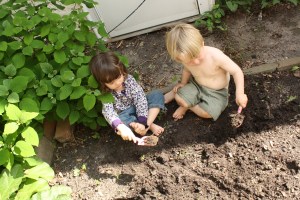
Most of us who enjoyed nature play in our childhoods realize that it didn’t matter if we had a pristine patch of forest to play in or just a couple of vacant city lots.  Either way, there were endless things to find, explore, capture, imagine, and play with.  But what was important is that these places were right there, within our walking/running/biking distance.  No car, no parent, and no schedule were needed to get outside and play in nature.

The children and nature movement is fostering wonderful new ways for kids to play outdoors, such as designed natural playspaces, family nature clubs, and naturalized schoolyards.  These and other similar efforts are valuable steps – not only for the kids, but for parents who are reconsidering their children’s indoor, nature-deprived lives.  Yet most of these new approaches are challenged in one vital dimension:  frequency

When Dr. Louise Chawla (University of Colorado) researched influential childhood experiences in nature, she found that, “The special places that stood out in memory, where people formed a first bond with the natural world, were always a part of the regular rhythm of life.”  Those powerful experiences didn’t typically come from annual family camping trips, but rather from day-after-day, week-after-week events in children’s lives.  Actually, no special research is needed to realize that frequent childhood activities have more lasting impact than ephemeral ones.  Practicing the violin once a month is not a very effective strategy!  Is it better than nothing?  Perhaps – but only if you set your sights very low.

The same equation applies to nature play.  If we want it to have maximum impact, then it needs to be “part of the regular rhythm of life.”  It seems unlikely that we can achieve this solely through monthly meet-ups or widely scattered playspaces – strategies that require parents, cars and calendars, and thus compete for time within families’ hectic schedules.  Are these approaches valuable?  Absolutely!  Are they sufficient?  Unlikely.

If we really want to power-up nature-based play, it needs to be available where children can enjoy it almost any day, without adult involvement or confining schedules.  For most kids this means either home yards or neighborhood parks – and (sadly) only the former is likely to alleviate the fears of 21st-century American parents.  Can a typical quarter-acre suburban yard actually support nature play?  Or a city lot half that size?  Or an apartment courtyard?  The answer is yes, especially for kids of about two to eight years old.  Younger children’s worlds are much smaller than those of adults.  They don’t need sprawling spaces or eye-popping vistas.  Their attention naturally focuses on tiny and manipulable pleasures:  on dandelions rather than rose gardens; on earthworms rather than herds of bison; on a patch of dirt to dig in rather than a yawning cave to explore.

Unfortunately, the typical American yard is no haven for nature play.  Good nature play requires “rich” settings – that is, a diversity of plants, animals, and landforms that create endless opportunities for discovery and engagement.  Turf grass lawns, solitary shade trees, and a few neatly trimmed shrubs do not meet these criteria.  However, even the sparest yard can be augmented for good nature play with a little thought, a dose of elbow grease, and much less money than what those elaborate backyard play sets cost.

The key is to create yards with a “density of diversity:” a collection of micro-habitats that will harbor lots of natural discoveries and delights throughout the seasons.  These micro-habitats might include a shrub thicket, a wildflower garden, a jumbled pile of boulders, a tiny garden pond, a butterfly garden, a berry patch, a mass of tall native grasses, or even a space allowed to just grow into whatever comes up!  Once you’ve established a few of these tiny worlds in your yard, you can enhance them with a digging pit or a giant dirt pile, a couple of large logs, bird and toad houses, a bench or hammock in a quiet nook, and plenty of “loose parts” to nurture creative and constructive play.  These loose parts can be branches, driftwood, cattails, bamboo poles, boards, tree cookies (log slices), tarps, seed pods, pine cones, large boxes, hay bales, and whatever else you can readily scrounge up.

By focusing your primary efforts on creating multiple micro-habitats, you will ensure authentic nature play:  interactions with real nature, in all of its beauty, wonder, unpredictability, and adventure.  Manufactured outdoor play components – like the plastic play equipment designed to look natural – do not create the same connections to the natural world.  Kids can’t peel the bark off a plastic log to find rollie-pollies, and they won’t find monarch caterpillars feeding on fiberglass leaves.  In fact, one big, over-grown wildflower bed — or a patch of flowering shrubs laced with tiny paths — will bring more lasting and real nature play to your kids than will any human-made product! 

Note, though, that nature playscapes are more “messy” than most home landscaping, so you may want to keep much of your nature play zone in the backyard where it won’t generate hostility from neighbors who think front yards should look like golf greens.  However, certain nature play features are usually “dressy” enough to bring into front yards, like butterfly gardens, boulders, and herb gardens.  And by highlighting street-side nature play, you may encourage other local parents to think more about “kid-scaping” their own yards.  Nature play zones get better and better when more of your neighbors imitate and add to your own efforts!

None of these steps towards home-based nature play require great knowledge, training, or expense.  They can be implemented bit by bit, and your plans can be in constant flux as you discover what your kids and their friends most enjoy.  The ultimate goal is to create enough nature play “critical mass” so that your kids are excited to play in their own yards — day after day, and whenever they wish.  Then nature play will be a regular joy for your children; then it will achieve the frequency needed to influence and benefit them for decades to come! 

A few suggested resources with ideas to support home-based nature play:

– “A Parents’ Guide to Nature Play” from Green Hearts Institute for Nature in Childhood: http://www.greenheartsinc.org/Parents__Guide.html

– National Wildlife Federation’s guidance on creating backyard wildlife habitats:www.nwf.org/Get-Outside/Outdoor-Activities/Garden-for-Wildlife/Crea…

“Nature Play:  Simple and Fun Ideas for All” from Forestry Commission England:

http://www.forestry.gov.uk/forestry/INFD-7LSEHW

A Child’s Garden:  Enchanting Outdoor Spaces for Children and Parents, by Molly Dannenmaier

Plants for Play:  A Plant Selection Guide for Children’s Outdoor Environments, by Robin Moore

Natural Playscapes:  Creating Outdoor Play Environments for the Soul, by Rusty Keeler

RELATED POSTS:
NOW THIS IS A PLAYGROUND!
BEYOND THE PLAYGROUND
NATURE-BASED CHILDCARE CENTER
The Power of Breastmilk: Kills HIV Virus!

http://www.news-medical.net/news/20120615/Breast-milk-protects-against-oral-transmission-of-HIV.aspx

Breast Milk Protects Against Oral Transmission of HIV

Published on June 15, 2012 at 1:02 AM

More than 15 percent of new HIV infections occur in children. Without treatment, only 65 percent of HIV-infected children will live until their first birthday, and fewer than half will make it to the age of two. Although breastfeeding is attributed to a significant number of these infections, most breastfed infants are not infected with HIV, despite
prolonged and repeated exposure.

HIV researchers have been left with a conundrum: does breast milke transmit the virus or protect against it?

New research from the University of North Carolina School of Medicine explores this paradox in a humanized mouse model, demonstrating that breast milk has a strong virus killing effect and protects against oral transmission of HIV.

“This study provides significant insight into the amazing ability of breast milk to destroy HIV and prevent its transmission,” said J. Victor Garcia, PhD, senior author on the study and professor of medicine in the UNC Center for Infectious Diseases and the UNC Center for AIDS Research. “It also provides new leads for the isolation of natural products that could be used to combat the virus.”

Garcia and colleagues pioneered the humanized “BLT” mouse model, which is created by introducing human bone marrow, liver and thymus tissues into animals without an immune system of their own. Humanized BLT mice have a fully functioning human immune system and can be infected with HIV in the same manner as humans.

In the study, the researchers first determined that the oral cavity and upper digestive tract of BLT mice have the same cells that affect oral transmission of HIV in humans and then successfully transmitted the virus to the mice through these pathways. When the mice were given virus in whole breast milk from HIV-negative women, however, the virus could not be transmitted

“These results are highly significant because they show that breast milk can completely block oral transmission of both forms of HIV that are found in the breast milk of HIV-infected mothers: virus particles and virus-infected cells.” said Angela Wahl, PhD, a post-doctoral researcher in Garcia’s lab and lead author on the paper. “This refutes the ‘Trojan horse’ hypothesis which says that HIV in cells is more stubborn against the body’s own innate defenses than HIV in virus particles.”

Finally, the researchers studied the effectiveness of pre-exposure prophylaxis (PrEP) with antiretroviral medication for oral transmission of HIV. Garcia and his team have previously shown that PrEP is effective against intravenous, vaginal and rectal transmission of HIV in humanized BLT mice. In this study, they gave the mice antiretroviral drugs for seven days (3 days before and 4 days after exposing them to the virus) and found 100 percent protection against virus transmission. These latest findings provide important leads to alternative treatments that could be used to prevent transmission.

“No child should ever be infected with HIV because it is breastfed. Breastfeeding provides critical nutrition and protection from other infections, especially where clean water for infant formula is scarce,” Garcia said.

“Understanding how HIV is transmitted to infants and children despite the protective effects of milk will help us close this important door to the spread of AIDS.”

The study appears in the June 14, 2012 issue of the online journal PLoS Pathogens.

Source University of North Carolina School of Medicine

The “Tell Me About Yourself Award”

Gratefully I accept the “Tell Me About Yourself Award!” given to me by TaurusMom Tells the Truth

I’ve been thinking about ways to write my responses and quite honestly, what will end up here is not what I planned out in my brain. But, alas, the clock is ticking and it has already been several weeks since this Awared was bestowed upon me.

What is there to know about me that might not otherwise be apparent?

Well….

1. In my pre-baby days I was a rock climber. And a pretty good one at that! Not great, but good. I LOVED it. Things change when you have a child. Over the few years that I was active in the sport I climbed in New York (the Gunks); Red Rock (Las Vegas); Canada, Minnesota, Colorado, Thailand, and a few other places. It was wonderful!  

There’s me with my gear to do some lead climbing, meaning that I go first and set the route. This picture was taken in Shawangunks Mountains in Upstate NY.

2. I love to bake. Since I had my baby, I try to make everything super healthy. I take boxed brownie mixes and add flax, wheat germ, bananas and apple sauce. The resemblance to brownies….? The taste? Yum!

3. I would die if I didn’t get to ride my bike to work and back. I love being in the fresh air and I love the feeling of freedom and not having to pay and not having to search for a parking spot.

4. I love taking pictures of kids. I like to capture their spirit and their expressions and their emotions. It’s a challenge and its fun. They are so spontaneous.

5. I’ve never been to New Zealand or Iceland and I’d really like to go.

6. I’m going to make a “bucket list” soon and post it on this blog. Perhaps that will help it seem more “real” and there will be more accountability!

THANKS AGAIN FOR PASSING THIS AWARD ALONG TO ME. IN TURN, I’D LIKE TO PASS THE AWARD ALONG TO:

http://yogicare.wordpress.com/
http://bellissimom.wordpress.com/
http://folkhaven.wordpress.com/

50 Parenting Lessons Learned the Hard WAy

50 Parenting Lessons I’ve Learned (The Hard Way)

Posted: Wed, 06 Jun 2012 13:14:07 +0000

 http://www.scarymommy.com/lessons-in-parenting-young-kids/?utm_source=feedburner&utm_medium=feed&utm_campaign=Feed%3A+ScaryMommy+%28Scary+Mommy%29

1. Super glue has no place in a house with young children.

2. Neither do Sharpie’s.

3. There is no such thing as allowing your kid to play with your phone “just once.”

4. Don’t use Google to diagnose illnesses. Ever.

5. Dollar store toys cost far more than a dollar in frustration, anguish and regret.

6. The terrible twos are bullshit. The terribleness lasts through at least age four. Or, forever.

7. Always carry wipes, long after diaper wearing has ended.

8. Resist purchasing character Bandaids, unless you’re prepared to buy a box a week.

9. You can never have too many Goldfish. The crackers, not the live ones.

10. Don’t buy bunk beds, unless you have absolutely no choice.

11. Keep track of who gave what at birthday parties.

12. Never stock batteries in your house, or you will be forced to make obnoxiously loud toys work once again.

13. Buy Mr. Clean Erasers in bulk.

14. Backup all photos. Better yet, print them.

15. Look in the oven before you turn it on.

16. There is no point in making beds.

17. Accept the fact that you will turn into your mother.

18. Always check pockets before washing clothes.

19. There is no such thing as “running” into Target with children.

20. Take more video.

21. Daily baths are overrated.

22. Find young babysitters and groom them. The less attractive, the better.

23. Always have ample one dollar bills on hand for lost teeth and bribery.

24. Carry plenty of emergency snacks in the car.

25. Keep expensive cosmetics out of arm’s reach. Arm’s reach, on a stool and tippy toes.

26. The four year old check-up is brutal.

27. Look before you sit down to pee.

28. Train your children to clean up all Lego’s before bed, knowing that nothing is more painful than stepping on a Lego with a bare foot at midnight.

29. Save “no” for when it really matters.

30. Over-apply sunscreen.

31. Practice caution when approaching that stray raisin on the floor. It’s probably not a raisin.

32. Never pay full price for kids clothes. They always go on sale and the expensive ones inevitably get ruined first.

33. There’s a reason why people surprise their kids with trips to Disney: Their anticipation may kill you.

34. Don’t take their word for it when children say they don’t need to pee before leaving the house.

35. Lock your bedroom door.

36. And, your bathroom one.

37. Never open a can of soda handed to you by a child.

38. Walk away from temper tantrums. Or, record them for future enjoyment.

39. Upset as you may be, hair grows back.

40. But, not on Barbie dolls, so hide the scissors.

41. Never buy more than two pairs of shoes at once. Their feet will inevitably grow once you do.

42. No matter how hard they promise, kids will never walk that puppy as much as you hoped.

43. Give away the books you can’t stand reading.

44. No child went to college with a pacifier.

45. Don’t buy any toy that is meant to come apart, unless they can put it back together themselves.

46. Keep a well-hidden stock of lollipops.

47. Don’t allow Play-Doh on carpets. Or, indoors, for that matter.

48. TV won’t really turn their brains to mush.

49. A bathroom in a house with boys will never smell clean.

50. It doesn’t get easier.

Children, Pregnant Women and Heat: It Can Be Dangerous!

http://yosemite.epa.gov/ochp/ochpweb.nsf/content/heat.htm

Extreme Heat: Effects on Children and Pregnant Women

Heat-related illnesses are common, yet preventable on hot days. Children and pregnant women need to take extra precautions to avoid overheating on days of extreme heat. Dehydration, heat stroke, and other heat illnesses may affect a child or pregnant woman more severely than the average adult. Download a copy of this information (PDF) (2 pp, 80K, About PDF).

Why are children more susceptible to extreme heat?

  • Physical characteristics – Children have a smaller body mass to surface area ratio than adults, making them more vulnerable to heat-related morbidity and mortality. Children are more likely to become dehydrated than adults because they can lose more fluid quickly.
  • Behaviors – Children play outside more than adults, and they may be at greater risk of heat stroke and exhaustion because they may lack the judgment to limit exertion during hot weather and to rehydrate themselves after long periods of time in the heat. There are also regular reports of infants dying when left in unattended vehicles, which suggests a low awareness of the dangers of heat events.

How do I know if my child is dehydrated?

  • Decreased physical activity
  • Lack of tears when crying
  • Dry mouth
  • Irritability and fussiness

What should I do if my child has become dehydrated?

  • Have the child or infant drink fluid replacement products
  • Allow for rehydration to take a few hours, over which children should stay in a cool, shaded area and sip fluids periodically
  • Call your doctor if symptoms do not improve or if they worsen

How do I know if my child has suffered a heat stroke?
Heat stroke, a condition in which the body becomes overheated in a relatively short span of time, can be life-threatening and requires immediate medical attention.

  • Skin is flushed, red and dry
  • Little or no sweating
  • Deep breathing
  • Dizziness, headache, and/or fatigue
  • Less urine is produced, of a dark yellowish color
  • Loss of consciousness

What should I do if my child has suffered a heat stroke?

  • Immediately remove child from heat and place in a cool environment
  • Place child in bath of cool water and massage skin to increase circulation (do not use water colder than 60F – may restrict blood vessels)
  • Take child to hospital or doctor as soon as possible

How can children be protected from the effects of extreme heat?

  • Hydration – Make sure children are drinking plenty of fluids while playing outside, especially if they are participating in sports or rigorous physical activity. Fluids should be drunk before, during and after periods of time in extreme heat.
  • Staying indoors – Ideally, children should avoid spending time outdoors during periods of extreme heat. Playing outside in the morning or evenings can protect children from dehydration or heat exhaustion. Never leave a child in a parked car, even if the windows are open.
  • Light clothing – Children should be dressed in light, loose-fitting clothes on extremely hot days. Breathable fabrics such as cotton are ideal because sweat can evaporate and cool down the child’s body.

How do I care for my infant during hot weather?

  • Check your baby’s diaper for concentrated urine, which can be a sign of dehydration.
  • If your infant is sweating, he or she is too warm. Remove him or her from the sun immediately and find a place for the baby to cool down.
  • Avoid using a fan on or near your baby; it dehydrates them faster.
  • A hat traps an infant’s body heat and should only be worn in the sun to avoid sunburn.
  • Never leave an infant in a parked car, even if the windows are open.

Why are pregnant woman especially at risk during periods of extreme heat?
An increase in the core body temperature of a pregnant woman may affect the fetus, especially during the first trimester.

How can pregnant women protect themselves from the effects of extreme heat?

  • Wear light loose fitting clothing
  • Stay hydrated by drinking six to eight glasses of water a day
  • Avoid caffeine, salt, and alcohol
  • Balance fluids by drinking beverages with sodium and other electrolytes
  • Limit midday excursions when temperatures are at their highest
  • Call doctor or go to emergency room if woman feels dizzy, short of breath, or lightheaded

Where can I find more information about extreme heat?

RELATED POSTS:

KIDS AND WATER SAFETY
KIDS AND WASHING MACHINES

Zucchini Pasta

I totally want to try this!

Gabby @ the veggie nook's avatarthe veggie nook

Good morning all!

IMG_1378

Going strong after day 2 of the sugar-free challenge. No more pictures to show but my breakfast was the chia pudding I shared yesterday, lunch was leftovers from the recipe I’m going to share today and dinner was a leftover veggie burger with quinoa, arugula and a chipotle cashew sauce. Turns out as long as you do a little reading of labels and have fresh-fruit available, being sugar free isn’t so bad 😉

Today I am going to bring you a sugar-free dinner recipe! I know it’s not intuitively a problem area in terms of added sugar, but a lot of those store-bought sauces and spice mixes contain hidden added sugar, as do a lot of salad dressings and soups. So starting with a recipe that is completely homemade ensures you control every ingredient that goes into it, including being sure it’s completely free of sugar!

View original post 685 more words